
PCR Automation System

Automate your genotyping workflow with a complete PCR automation system from 3cr Bioscience. Our automated PCR systems handle PCR setup and SNP genotyping with minimal hands-on time, helping laboratories increase throughput, improve accuracy, and reduce manual errors across agriculture and life science applications. Whether you need a fully integrated PCR automation pipeline or a standalone automated PCR instrument, our solutions, powered by PACE® reagents, scale easily for labs of any size and deliver consistent, high-performance results.

What Is a PCR Automation System?

Introducing 3CR Bio’s PCR Automation System

A PCR automation system is an integrated laboratory solution that automates the full PCR workflow, from sample preparation and DNA extraction to PCR setup, thermal cycling, and data analysis. By replacing manual steps with automated instruments, PCR automation systems increase throughput, improve reproducibility, and reduce human error in high-volume genotyping laboratories.

PCR Automation System for Genotyping and Automated PCR Setup

3CR Bioscience offers a cutting-edge range of genotyping instruments designed to streamline laboratory automation systems. Our advanced solutions include MagC 9600 and MagC 384 for automated DNA extraction, the GeneArrayer series for precision liquid handling and plate sealing, the GeneCycler high-throughput water bath thermal cycler, and the GeneScanner for high-speed PCR plate fluorescence scanning.

Whether you need a single instrument or a complete PCR automation system for end-to-end workflow automation, 3cr Bioscience delivers flexible solutions that increase efficiency, reduce manual errors, and support high-performance genotyping at any scale.

AUTOMATED EXTRACTION

Automated Extraction

Fully automated, high-quality nucleic acid extraction & purification instrumentation for use with magnetic bead-based reagents. Suitable for genotyping, library sequencing, gene chip analysis & more.

MORE INFORMATION
LIQUID HANDLING

LIQUID HANDLING

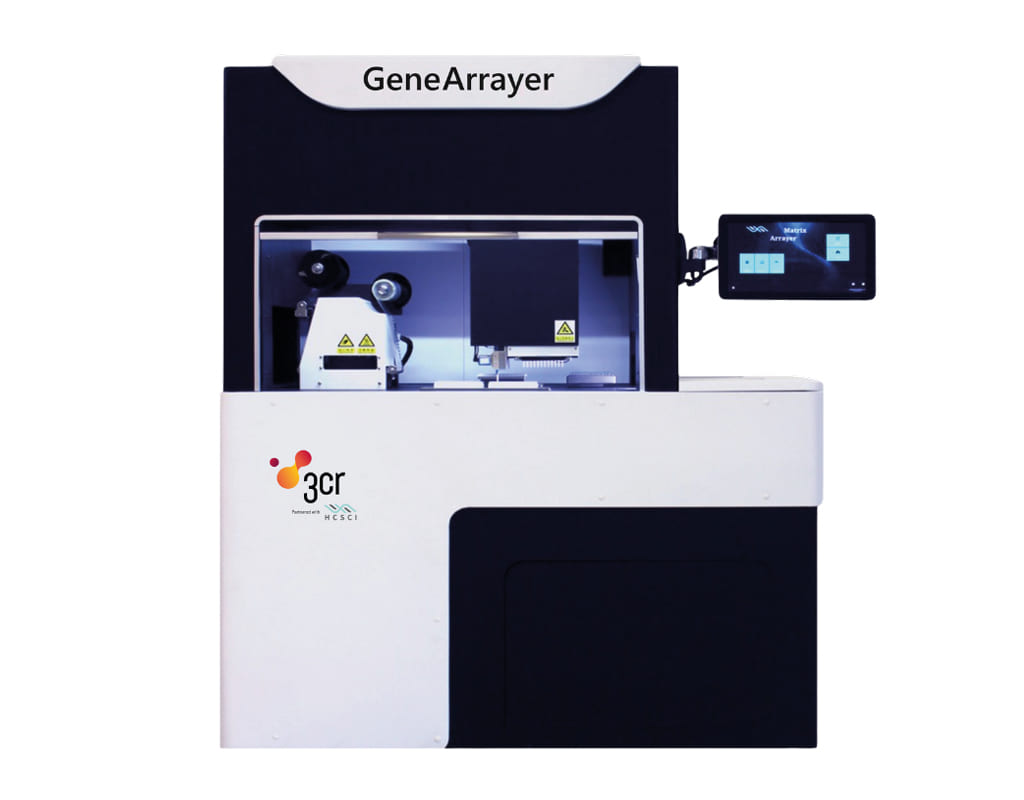
Automated liquid handling workstation for sample replication and reformatting, low volume assay dispensing, plate sealing and more. On-deck sonicating washing dramatically reduces tip consumption and cost.

MORE INFORMATION
THERMAL CYCLING

THERMAL CYCLING

A highly efficient, high-throughput thermal cycling water bath instrument capable of running up to 25 PCR plates per run. Robust, streamlined basket design.

MORE INFORMATION
DATA ANALYSIS

DATA ANALYSIS

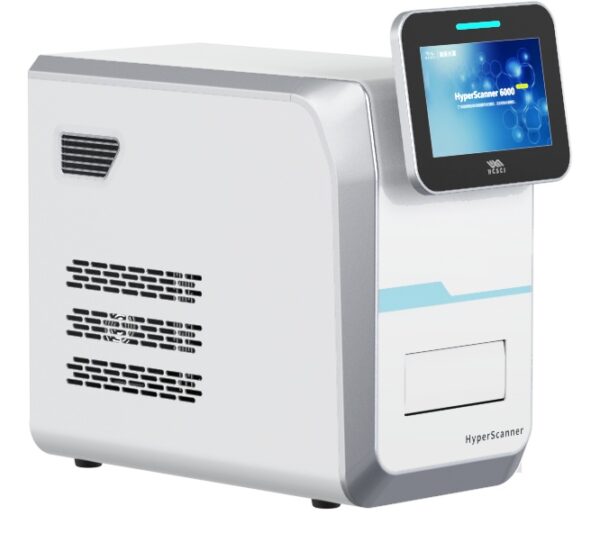
A high-speed plate scanner for precise fluorescence signal detection and analysis. Full-field scanning technology for excellent sensitivity and resolution; automated loading, detection and unloading.

MORE INFORMATION

TISSUE HOMOGENISING

HIGH-THROUGHPUT TISSUE HOMOGENISATION FOR RELIABLE DNA PREP

Meet the Turbo Grinder, a powerful bead-based tissue homogenizer for plants, animals, and microbes. Processing up to 576 samples per run, it delivers fast, uniform grinding for high-quality downstream DNA analysis. With programmable touchscreen control, flexible dry/wet/frozen modes, and low-noise operation, it streamlines sample prep for genotyping and sequencing workflows.

Automated Extraction

STREAMLINED, HIGH-QUALITY NUCLEIC ACID EXTRACTION FROM DIVERSE SAMPLES IN MINUTES

Meet the MagC 9600 and MagC 384, your all-in-one nucleic acid extraction solutions. These advanced instruments are compatible with magnetic bead-based reagent kits and process up to 384 samples in 25–30 minutes from a range of starting material. With pre-loaded programs, touch-screen operation, and contamination control, they deliver high-quality extractions for genotyping, sequencing, and gene analysis. Streamline your workflow with precise, user-friendly automation.

Liquid Handling

TRANSFORM YOUR LAB WITH COMPREHENSIVE LIQUID HANDLING CAPABILITIES AND OPTIMIZED LAB WORKFLOWS

The GeneArrayer automates sample replication, assay dispensing, pipette washing, and plate sealing in one workstation. With precise nanolitre dispensing, it minimizes reagent and plastic use while ensuring high levels of accuracy. This precision makes the GeneArrayer ideal for assay miniaturisation strategies in high-throughput PCR and SNP genotyping workflows. Featuring a 96-tip head, barcode scanner, and rapid 384-well plate dispensing, the GeneArrayer streamlines liquid handling and dispensing workflows. Upgrade to the GeneArrayer Pro for ultra-high-throughput automation.

Thermal Cycling

HIGH-THROUGHPUT WATER BATH THERMAL CYCLING FOR MAXIMUM EFFICIENCY, Performance AND SUSTAINABILITY.​

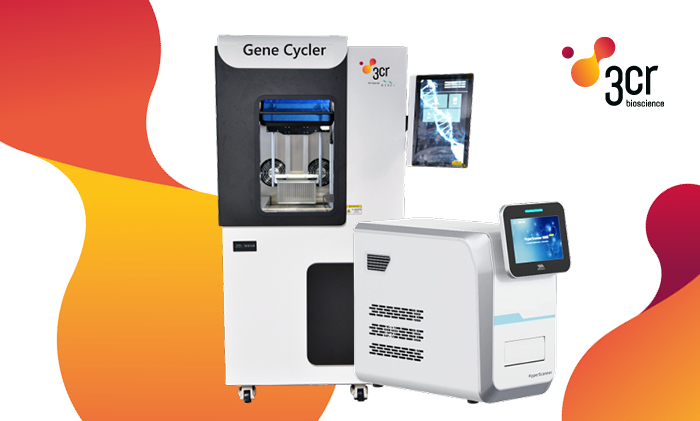
The GeneCycler is a high-efficiency water bath thermal cycling instrument. Up to 25 low profile 384-well PCR plates or 20 standard 384-well or 1536-well PCR plates can be cycled per run. The GeneCycler’s integrated touchscreen control panel provides a user-friendly interface to easily create protocols and monitor progress during each run. With an improved heating design, the GeneCycler increases throughput while reducing running costs, using up to 80% less energy than standard Peltier PCR blocks.

Featuring 3 individually temperature-controlled water baths, high-efficiency heating, and a robust basket design, the GeneCycler streamlines and enhances your thermal cycling process.

Data Analysis

GENERATE SUPERIOR GENOTYPING DATA WITH HIGH SPEED AND ACCURACY USING HIGH-THROUGHPUT FLUORESCENCE SCANNING

The GeneScanner is a high-throughput fluorescence scanner for rapid, sensitive signal detection. It features automated plate handling, barcode reading, and full-field scanning with read times as low as 5 seconds per filter. Detecting volumes as low as 1 µL, the GeneScanner supports multiple detection channels across the visible spectrum and a range of PCR plates, and is also duplex compatible. Boost efficiency with fast, precise fluorescence analysis.

End-to-end genotyping solutions

Unlock the full spectrum of genotyping possibilities with our comprehensive, modular range of instruments. Explore our end-to-end genotyping automation solutions and discover the perfect fit for your laboratory, ensuring efficiency and accuracy at every step.

LOW

WORKFLOW SOLUTIONS

Entry level genotyping lab workflow with manual dispensing into PCR plates run on standard Peltier thermal cycling instruments.

  • Manual pipetting

    Multi-channel pipette manual liquid handling plus Peltier PCR block cycling.

  • GeneScanner:

    High-speed PCR plate fluorescence scanning.
Medium

WORKFLOW SOLUTIONS

Balanced solution offering moderate capacity and speed, perfect for mid-sized labs with growing demands.

  • MagC 9600:

    Single plate automated extraction

  • Manual pipetting

    Multi-channel pipette manual liquid handling

  • GeneCycler:

    High-throughput water bath thermal cycler.

  • GeneScanner:

    High-speed PCR plate fluorescence scanning.
High

WORKFLOW SOLUTIONS

High-efficiency genotyping for larger labs, providing fast and reliable results with significant sample volumes.

Ultra High

WORKFLOW SOLUTIONS

Top-tier solution designed for extensive genotyping projects, ensuring maximum productivity and rapid data generation.

HyperGeno™ Ultra-High-Throughput Automated Genotyping System

PCR Automation System for Genotyping and Automated PCR Setup

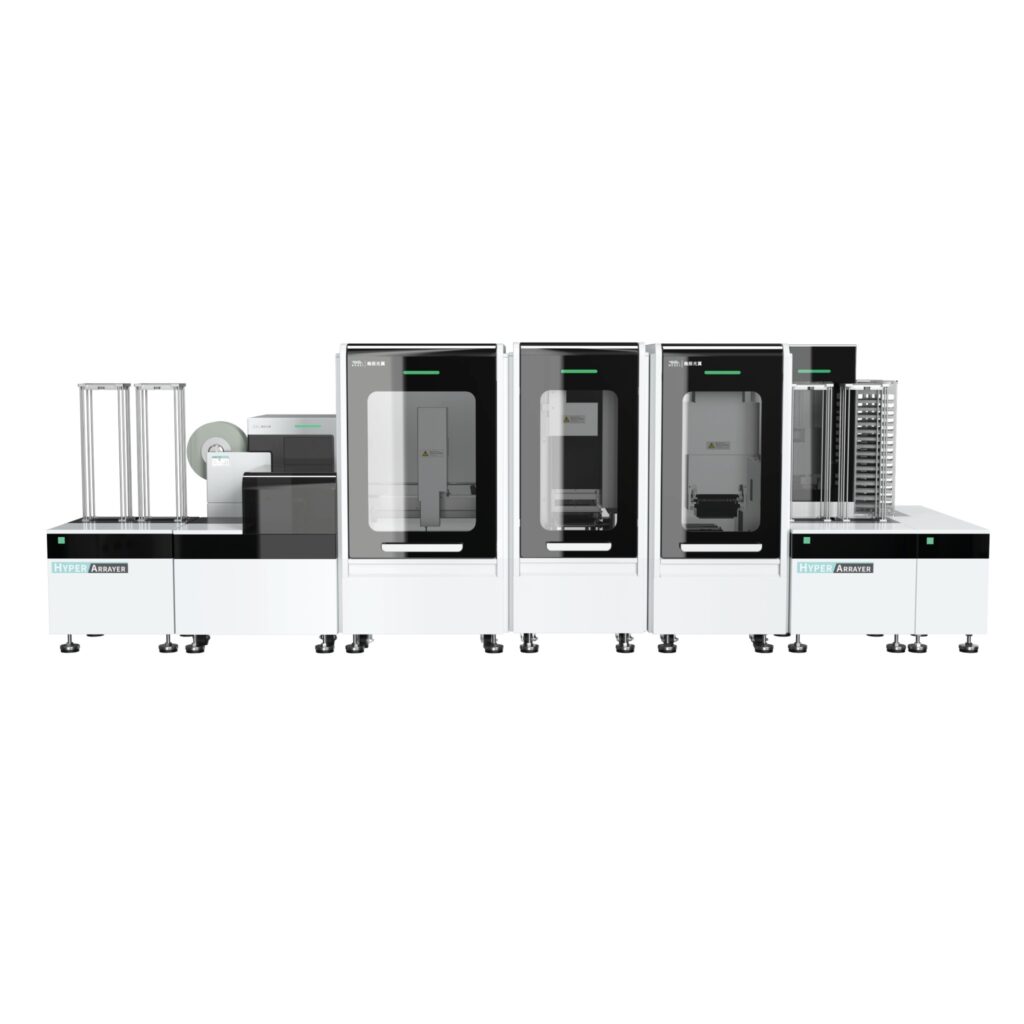
The HyperGeno™ is 3CR Bioscience’s most advanced, high-throughput automation system, delivering a fully integrated, end-to-end genotyping workflow from sample preparation to data analysis. Designed for large-scale molecular breeding and genomics laboratories, it enables true walk-away operation with maximum accuracy, scalability, and efficiency.

Manual PCR vs PCR Automation Systems

Key Differences in Throughput, Accuracy and Scalability

As genotyping demand grows, many laboratories are moving from manual PCR setup to automated PCR systems. Automation reduces hands-on time, improves reproducibility, and enables higher-throughput SNP genotyping with fewer manual errors. The table below compares key differences between manual PCR workflows and PCR automation systems.

Feature / Criteria Manual PCR PCR Automation System
PCR setup Full manual pipetting Full or semi-automated liquid handling;
Throughput Low to medium Medium to ultra-high throughput
Hands-on time High Very low
Reproducibility Variable, operator-dependent Highly standardised and reproducible
Error rate Higher risk of pipetting errors Significantly reduced
Contamination risk Higher due to manual handling Lower due to fewer manual steps
Scalability Limited Easily scalable and modular
Assay miniaturisation Difficult Highly compatible
Reagent & plastic usage Higher Reduced via precision dispensing
Labour costs High Lower over time
Data consistency Variable Consistent across runs
Best suited for Small labs, low volume High-throughput and industrial labs

FREQUENTLY ASKED QUESTIONS

PCR automation increases throughput, improves reproducibility, and significantly reduces pipetting errors and contamination risk. Automated systems also lower long-term costs by reducing reagent waste, plastic consumption, and labour requirements, making them ideal for high-volume genotyping laboratories.

Automated PCR systems are best suited for laboratories processing medium to high sample volumes, including genotyping labs, agricultural breeding programs, and life science facilities that require consistent, scalable, and reproducible PCR workflows.

Yes. Modular PCR automation systems allow laboratories to start with a single automated instrument (e.g. liquid handling or extraction) and expand into a fully integrated, end-to-end PCR automation workflow as throughput requirements grow.

Yes. By standardising liquid handling, thermal cycling conditions, and detection parameters, PCR automation reduces variability between runs and operators, delivering more consistent and reliable genotyping data.

PCR automation systems are highly compatible with SNP genotyping workflows, especially when combined with optimized reagents such as PACE® master mixes. Automation supports assay miniaturisation, multiplexing, and high-density plate formats, enabling efficient SNP analysis at scale.

Compared to manual PCR workflows, automation can reduce hands-on time by 60–90%, depending on workflow complexity and sample volume. This allows laboratory staff to focus on data interpretation rather than repetitive pipetting tasks

Yes. Automated PCR systems minimise manual handling steps, reducing exposure to contaminants and improving overall assay reliability, especially in high-throughput environments.

While the initial investment is higher than manual PCR, automation delivers strong ROI for high-throughput labs by reducing labour costs, reagent consumption, repeat experiments, and operational errors over time.

READY TO EXPERIENCE THE FUTURE OF LAB AUTOMATION?

Fill in this form to request more information, a personalized quote, or a live demo of our equipment. Take the next step towards revolutionizing your laboratory workflow today!

This field is for validation purposes and should be left unchanged.
Name(Required)
What can we help you with?

[fibosearch]
This field is for validation purposes and should be left unchanged.
Name(Required)

Contact us

Resolve Genotyping Challenges. With One Practical Guide.

From failed amplification to scattered cluster plots — this guide provides structured, expert-backed solutions for the 7 most common PACE® genotyping issues.

"(Required)" indicates required fields

This field is for validation purposes and should be left unchanged.
I’d like to sign up for the newsletter

MEET OUR TEAM

Steve AsquithManaging Director
Steve began his career in the Genetics Division of GlaxoSmithKline, as part of the team establishing GSK’s high-throughput core genotyping laboratory. Steve joined KBioscience when it was first founded in 2002 and was a key driver in taking the company from a small start-up to a multi-national service laboratory, quickly growing the company’s revenue to over $7.5M p.a. Following the acquisition of Kbioscience by LGC in 2011, Steve was appointed Global Director of Operations for LGC Genomics, responsible for over 100 staff in Europe and N. America, successfully elevating the genotyping products and service business. Steve held a crucial leadership role until he left in 2016. In 2017 Steve joined forces with John Holme to create 3CR Bioscience, a new company with a mission to deliver outstanding, customer-focused genotyping products with innovation and affordability at its core.
Dr. John HolmeTechnical Director

John joined KBioscience shortly after it was founded, in 2003, and became Head of Technical Development, building the company’s genotyping and DNA extraction product portfolio and service delivery until 2011 when it was acquired by LGC. Post-acquisition, John was appointed Head of Technical Group for LGC Genomics, in charge of all Research & Development and Technical Support activities for the company. In this role John continued to build on the high-quality products and services provided to the companies growing customer base.

During the 19 years John has worked in commercial R&D, he has co-invented numerous highly successful products including PACE®, ProbeSure, KASP™, KlearKall, KlearGene, KlearAmp and KlearTaq™, creating breakthrough offerings in genotyping and extraction and generating huge revenues for the companies he has worked in. In 2017, he joined forces with Steve Asquith and started 3CR Bioscience. John is dedicated to developing outstanding, innovative genotyping products and providing the very best technical support to customers globally.

Dr. Nisha JainOperations Director

Nisha has been innovating since the start of her career at Geneform Technologies developing Iso-thermal Genotyping Technologies. Nisha joined KBioscience in 2008, as Senior R&D Scientist and key account Technical Support Scientist, developing KASP and Klearkall performance and coinventing two further versions of KASP.

Nisha has more than 15 years’ experience working in molecular biology and genotyping technologies, with extensive experience in the areas of R&D, Quality Assurance and Customer Technical Support. She has technically assisted many giants of the industry with their protocol development and troubleshooting and continues to deliver high-quality support and guidance. In 2018, Nisha joined 3CR Bioscience as Operations Director where she continues to develop PACE and ProbeSure for an increasing range of applications, and to grow 3CR Bioscience’s new product pipeline. Nisha is dedicated to developing outstanding, innovative genotyping products and providing the very best technical support to customers globally.

Nazma SaffinGeneral Manager
For 20 years Nazma Saffin has worked and gained extensive expertise within the genotyping sector. Working at Kbioscience and then LGC, she has held operational leadership posts responsible for manufacturing and laboratory services. With experience of ISO 9001 implementation, production scale up and LEAN operations, Nazma has successfully led highly profitable production departments. Joining 3CR Bioscience in 2022, Nazma is committed to delivering operational excellence.
Greig PollandAutomation and Support Manager

Greig is a hands-on automation specialist and team leader with a strong background in laboratory and industrial automation. He has spent over 25 years developing, installing, and supporting automated systems that transformed laboratory workflows. During this time, Greig worked closely with scientists and engineers to tailor automation solutions for genotyping and molecular biology, an experience that sparked his lasting passion for combining technology with practical science.

Since then, Greig has built on that foundation through leadership roles where he leads automation and support operations. He’s known for being approachable, commercially minded, and deeply committed to helping teams and customers get the best from their technology.

Whether managing a complex automation rollout or helping a customer troubleshoot in real time, Greig brings a thoughtful, collaborative approach that keeps people ,not just machines, at the centre of what he does.