PACE® – What is allele-specific PCR?
Allele-specific PCR distinguishes between two versions of a single DNA base by using primers that match one allele exactly. Only the matching primer extends efficiently, and a fluorescent reporter records which one did. This makes it the standard method for SNP genotyping in plant and animal breeding, where thousands of samples are screened against a small number of known markers. PACE® is the genotyping chemistry 3CR Bioscience supplies for this method, and it runs on every common PCR platform from 96-well plates to microfluidic chips.
Why breeding programmes use allele-specific PCR
SNP genotyping and allele-specific PCR are cornerstones of modern genetic analysis, allowing scientists to track and monitor genetic variations with pinpoint accuracy. With PACE genotyping reagents, breeders track known variants across large populations at a low cost per data point.
Which platforms PACE supports
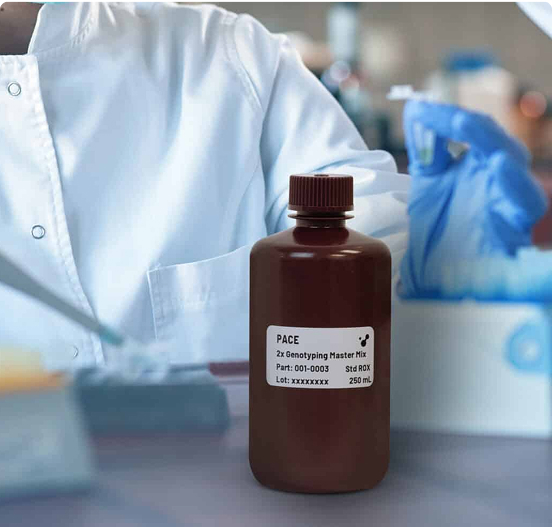
PACE genotyping master mixes are platform agnostic for precision PCR genotyping. PACE’s patented genotyping chemistry has been meticulously designed to perform across all PCR genotyping platforms and reaction volumes, providing consistently accurate results. In addition, all PACE genotyping mixes are supplied with Standard, High, Low, or No ROX normalisation dye options for optimal performance.
| Platform | Format | Suitable |
| Standard PCR plates | 96-well, 384-well, 1536-well | Yes |
| Array Tape® | Continuous tape | Yes |
| Standard Biotools Biomark X9 | Microfluidic chip, nanolitre | Yes |
| Standard Biotools Biomark HD | Microfluidic chip, nanolitre | Yes |
| ROX normalisation options | Standard, High, Low, None | All four supplied |
Reaction volumes and plate formats
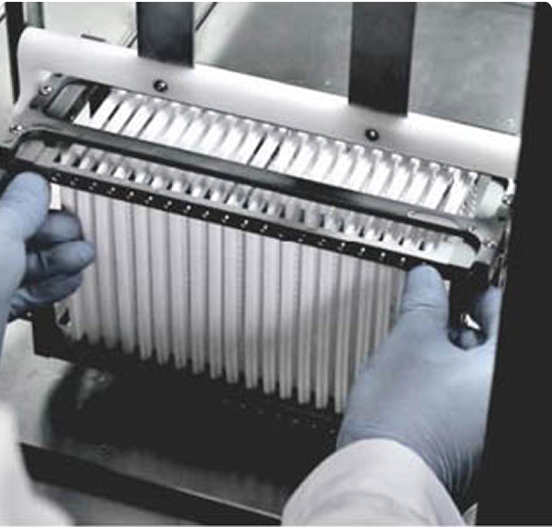
PACE genotyping master mixes are compatible with all major PCR genotyping platforms, including 96-, 384-, and 1536-well PCR plates, and Array Tape®. PACE generates accurate data regardless of the reaction volume. PACE is suitable for Biomark X9 and Biomark HD automated, chip-based PCR systems from Standard Biotools (formerly Fluidigm) that use microfluidics technology to process samples at nanoliter-scale volumes.
Running PACE on microfluidics with the Biomark X9
By harnessing the power of microfluidics technology, PACE enables high-throughput, scalable SNP and Indel marker development and screening. This makes it an ideal solution for large-scale, cost-effective allele-specific PCR analysis and SNP genotyping using microfluidics platforms such as the Biomark X9 System from Standard Biotools. The Biomark platforms offer automated, high-performance PCR at nanolitre volumes and simultaneous monitoring of markers across numerous samples, drastically reducing both time and cost.
Breeders and researchers alike can develop platform-agnostic SNP marker sets on these and similar high-throughput platforms, utilising PACE genotyping reagents for universal reporting. PACE is compatible with multiple other throughput platforms downstream to ensure future-proof automation, and reproducibility.
Results from 96 samples across 96 SNPs
An application note produced with Standard Biotools records PACE performance on the Biomark X9 System. A public research institute genotyped 96 samples across 96 SNPs at nanolitre volumes. The data show tight clustering and high concordance between calls, which confirms that the chemistry holds its accuracy when the reaction volume drops to the microfluidic scale. The full application note is available from 3CR Bioscience.
Next-generation sequencing (NGS) for SNP discovery followed by PACE SNP marker saturation in quantitative trait loci (QTL) intervals is a great, real-world example of the utility of this combination. Designing PACE genotyping assays against SNP variants, high-throughput screening using the Biomark X9 System, and genotyping recombinants on lower-throughput platforms demonstrates the versatility in research and breeding applications.


Figure 1. Example data of 96 samples over 96 SNPs. Data calling (A) from the heat map (B) shows tight clustering and a high concordance of SNPs in the principal component analysis plot. Actual data from a high-throughput genotyping and sequencing technology service provider for a public research institute using PACE genotyping with the Biomark X9.
Frequently asked questions
What is the difference between allele-specific PCR and sequencing?
Allele-specific PCR tests a known set of variants and returns a genotype call per marker. Sequencing reads the sequence itself and discovers variants that are not yet known. Breeding programmes normally use sequencing once to find markers, then allele-specific PCR to screen populations against those markers at a far lower cost per sample.
Can allele-specific PCR run on crude DNA extracts?
Yes, with an inhibitor resistant chemistry. PACE 2.0 Genotyping Master Mix is formulated for crudely extracted template and removes the purification step.
How many samples can be genotyped in one run?
This depends on the platform. A 1536-well plate holds 1,536 reactions, and microfluidic systems such as the Biomark X9 process 96 samples against 96 markers in a single chip.
Summary
Allele-specific PCR remains the most economical route to SNP data once the markers are known. PACE runs the method on every common platform, from 96-well plates through 1536-well formats to the Biomark X9 microfluidic system, with the same chemistry and the same ROX options throughout. That means a breeding programme can change throughput or instrument without revalidating its assays.