The next generation of crop improvement relies on the ability to identify and select the best plants early, accurately and cost-effectively. In cranberry breeding, where traits such as texture, fruit rot resistance (FRR) and epicuticular wax (ECW) directly impact product quality and profitability, traditional selection methods can take years to yield results.
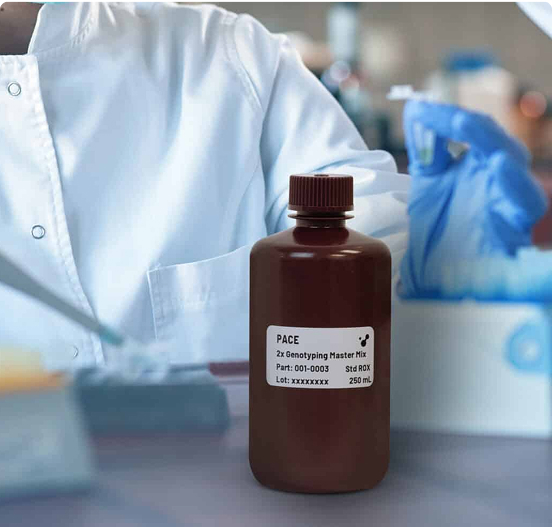
A collaborative team of USDA-ARS and Rutgers University scientists recently demonstrated how PACE® (PCR Allelic Competitive Extension) genotyping accelerates breeding for improved fruit quality. By converting validated QTLs (quantitative trait loci) into robust DNA assays, they successfully screened breeding populations for critical traits — reducing time, cost and uncertainty in developing new cultivars.
Turning Genomic Discoveries into Practical Tools
Through the USDA-supported VacCAP project, researchers mapped genomic regions controlling epicuticular wax — a natural protective coating that reduces heat stress and water loss — and fruit rot resistance, a key factor in shelf-life and reduced fungicide dependence.
Two key breakthroughs emerged:
- A SNP on chromosome 1 linked to ECW levels
- A SNP on chromosome 2 linked to FRR
Each SNP was converted into a PACE® genotyping assay. These assays allowed breeders to rapidly identify seedlings likely to carry favourable alleles — those with higher ECW (for better stress tolerance) and lower FRR (for reduced losses and less chemical input).
From Greenhouse to Market, Faster
Traditionally, plant breeding relies on visible traits — selecting seedlings in the field, over multiple seasons, based on how they grow, yield or resist disease. While effective, this process is slow, resource-intensive and unpredictable.
By integrating validated genetic markers into the breeding process, researchers can now predict key traits in young seedlings — long before they are planted in the field. With PACE® assays, this means:
- Earlier insight — fruit quality traits can be identified at the DNA level, months or even years before they are physically expressed.
- Smarter investment — only the most promising lines are advanced into field trials that require significant space, labor and funding.
- Strategic trait stacking — breeders can combine multiple desirable characteristics in a single cross with far greater efficiency, accelerating the development of cultivars that meet multiple industry needs at once.
This approach fundamentally shifts breeding from a trial-and-error, season-by-season process to a data-driven, precision pipeline. Instead of waiting years to confirm if a cross produced something valuable, breeders can make confident, informed decisions at the seedling stage — cutting years from the cultivar development timeline, reducing costs and increasing the likelihood of commercial success.
That’s why this work was highlighted in the VacCAP newsletter: it doesn’t just represent a research milestone, it demonstrates a transformational breeding strategy with immediate, practical benefits for growers, processors and consumers.
Why PACE® was the Perfect Fit
PACE® technology offered the cranberry breeding teams several distinct advantages:
- Cost-effective — lower consumables compared with probe-based methods
- Flexible — works with unlabelled primers, avoiding probe design constraints
- High-throughput — ideal for screening hundreds or thousands of seedlings
- Proven accuracy — validated SNP-to-trait associations ensure confident decisions
For the cranberry industry — a market increasingly focused on consistency, reduced inputs and product innovation — this means improved cultivars can reach growers and processors years sooner, with traits that directly impact profitability and sustainability.
Want to dive deeper into this cranberry breeding breakthrough? You can download the full VacCAP newsletter here .
3CR: Making Science Affordable, Globally
At 3CR, we are proud that our patented PACE® technology is helping breeding programs translate genomic insights into commercial impact. From cranberries to cereals, aquaculture to livestock, PACE® enables researchers to move from mapping to implementation — bridging the gap between discovery and delivery.
With free assay design support and reliable, affordable reagents, we partner with the global research community to ensure that better science leads to better products — faster.
If your breeding program is ready to accelerate progress with precision genotyping, our team can help you start today.