Discover the latest advances in plant breeding with our blog on newly released PACE SNP markers for Cannabis sativa. Learn how these innovative tools improve selection for autoflowering, cannabinoid chemotype, and sex determination in cannabis breeding programs.
What is Plant Breeding?
Plant breeding is the science of selecting and crossing plants to develop new varieties with desirable traits, such as improved yield, disease resistance, or specific cannabinoid profiles. By using modern plant breeding techniques including molecular markers like SNPs breeders can accelerate the process, making it faster and more precise. In cannabis and hemp, plant breeding enables the development of cultivars tailored for medicinal, industrial, or recreational use.
What is Cannabis Breeding?
Cannabis breeding is the process of selecting and crossing different cannabis plants to produce new varieties with specific traits, such as cannabinoid content, flowering time, or disease resistance. By combining traditional plant breeding methods with advanced molecular markers like SNPs, breeders can efficiently create improved cannabis cultivars for both hemp and medicinal markets. Modern cannabis breeding accelerates genetic improvements, ensuring plants meet industry standards and regulatory requirements.
Understanding Cannabis: From Ancient Uses to Modern Breeding
Cannabis, a versatile crop with multifaceted utility, has served myriad purposes throughout history, from providing valuable fibers for ropes and nets to yielding protein- and oil-rich seeds. Its traditional medicinal use, dating back to 8000 BCE, and psychoactive properties highlight its cultural and therapeutic importance.
As interest in cannabis breeding grows, it’s important to understand what is the difference between a transgenic plant and a plant produced through selective breeding? While transgenic plants are genetically engineered with DNA from other species, selective breeding in cannabis involves choosing parent plants with desired traits and crossing them naturally over generations. This approach, combined with modern molecular marker tools, enables breeders to develop hemp or drug-type cannabis varieties tailored to legal standards and consumer needs.
Despite its versatility, cannabis is regulated based on THC content. In regions like Canada, the USA, and Europe, plants are classified as hemp (less than 0.3% THC) or drug-type (greater than 0.3% THC). Understanding the genetic differences and the role of selective breeding is essential for meeting both regulatory requirements and market demands.
SNP Plant Breeding Markers: Advancing Molecular Selection in Cannabis
SNP plant breeding markers are powerful molecular tools that have transformed cannabis and hemp breeding. Unlike traditional SSR markers, SNP genotyping offers higher precision, speed, and scalability for selecting key traits such as sex, cannabinoid profile, and autoflowering. Using molecular marker plant breeding strategies, breeders can rapidly screen large populations and accelerate the development of superior cultivars.
SNP plant breeding markers are powerful molecular tools that have transformed cannabis and hemp breeding. Unlike traditional markers, SNP genotyping offer higher precision, speed, and scalability for selecting key traits such as sex, cannabinoid profile, and autoflowering. Using molecular marker plant breeding strategies, breeders can rapidly screen large populations and accelerate the development of superior cultivars.
Case Study: Hemp Breeding with PACE Genotyping
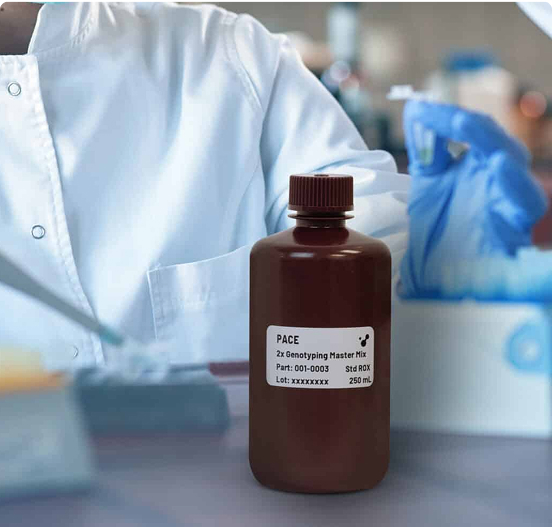
PACE genotyping has already proven itself as an invaluable tool for Cannabis breeders and researchers. Hemp (Cannabis sativa) is an extraordinarily versatile crop, with applications ranging from medicinal compounds to seed oil and fiber products. 3CR Bio spoke with Dr. Jacob Toth, a Plant Breeding and Genetics Post-Doc at Cornell University’s School of Integrated Plant Science, who is part of Professor Larry Smart’s research group. This conversation is featured in our case study ‘Understanding the genetics of important traits in hemp to help breed improved cultivars.’ We delved into their research and explored how they incorporate PACE® into their workflow.


Open Access Genetic Markers for Sex and Cannabinoid Chemotype in Cannabis sativa
In the realm of hemp breeding and cultivation, the quest for efficient selection and breeding tools has reached a milestone with the development and validation of genetic markers for sex and cannabinoid chemotype. These markers, crafted through high-throughput PACE Genotyping Assays (Allele-specific PCR), signify a pivotal advancement, empowering breeders with precision and efficiency in selecting desired traits. Click here to read the full research paper.
Crucial Traits: Sex and Cannabinoid Chemotype
Sex determination and cannabinoid chemotype stand as pivotal qualitative traits for hemp producers and breeders. The legal landscape demands that hemp cultivars produce less than 0.3% THC by dry weight, underscoring the necessity for understanding genetic predisposition towards THC production. Yet, phenotyping these traits in young plants poses formidable challenges. Until flowering commences, distinguishing between male and female plants remains elusive, compounded by the scant cannabinoid production in immature plants.
Validation and Reliability
The validation of the sex assay across a diverse germplasm spectrum heralds a breakthrough, effectively discerning male plants from their female and monoecious counterparts. Leveraging publicly available sequence data, the development of reliable and high-throughput PACE Genotyping Assays as SNP markers has revolutionized the prediction of sex and cannabinoid chemotype phenotypes in Cannabis sativa. Notably, the transparency of the assay designs, freely accessible for adoption, epitomizes collaboration and progress within the scientific community.
SNP Genotyping with Allele-Specific PCR and PACE Genotyping
SNP markers and SNP genotyping are now widely used in breed improvement programs due to their high-throughput capability, accuracy, and efficiency in marker-assisted selection; PACE technology is ideal for developing, validating and running these breeder-friendly SNP and Indel markers. For further insights into 3CR Bio and Plant Breeding, click here.
PACE Genotyping: A Game-Changing Marker System
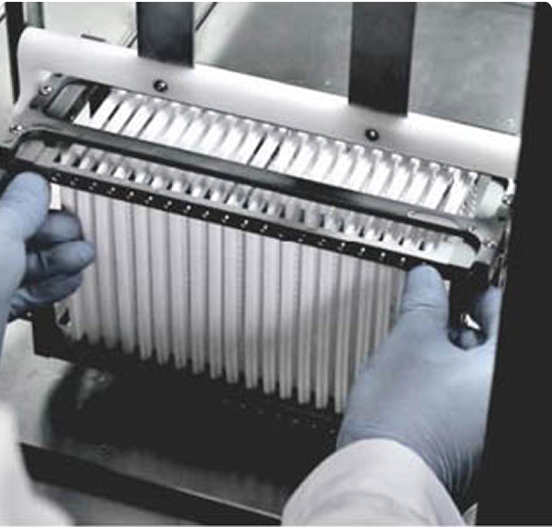
PACE genotyping, with its high-throughput fluorescence-based marker system, emerges as a beacon of innovation, enabling the interrogation of SNPs, indels, and other polymorphic DNA features. Its superiority over gel-based systems is evident, boasting a staggering 45-fold increase in speed. Moreover, PACE’s cost-effectiveness and retention of simple codominance set it apart from other marker systems. Requiring only a qPCR instrument or thermal cycler and a fluorescent plate reader for scoring, the ease and rapidity of PACE genotyping renders this technology tailor-made for breeding endeavours and advanced production systems.
The development and validation of genetic markers for sex and cannabinoid chemotype in Cannabis sativa, propelled by PACE Genotyping Assays and reagents as SNP markers, signify a transformative leap forward in hemp breeding and cultivation. These markers serve as catalysts for innovation, empowering breeders with efficient tools to navigate the intricate landscape of trait selection and cultivation. As we harness the power of genetics to propel hemp cultivation into the future, these markers stand as beacons of progress, guiding the development of improved cultivars tailored to diverse applications and industry needs
Autoflowering Cannabis: A Journey of Innovation
Autoflowering cannabis, once a niche trait, has now become indispensable to breeders and growers alike. This revolutionary feature, driven by genetic innovation, offers a multitude of advantages, propelling the cannabis industry forward and meeting the dynamic demands of consumers worldwide.
The Significance of Autoflowering Traits
Shortened Growth Cycle: Unlike traditional cannabis strains dependent on light cycles, autoflowering varieties bloom based on age, enabling quicker harvests. This attribute proves invaluable, particularly for outdoor cultivators facing limited growing seasons or inadequate sunlight.
Flexibility: Autoflowering plants thrive in diverse environments, including indoor setups where light management can be challenging. This adaptability opens doors for growers to experiment with cultivation techniques and optimize their yields.
Continuous Harvests: By flowering independently of light cycles, autoflowering plants offer growers the flexibility to stagger their planting, ensuring a steady stream of harvests throughout the year. This consistent supply is essential for meeting market demands and maximizing productivity.
Compact Size: Characterized by their smaller stature, autoflowering strains are ideal for discreet or confined growing spaces. This compactness not only enhances cultivation efficiency but also facilitates stealthy operations where privacy is paramount.
Genetic Innovation: Advancements in autoflowering genetics pave the way for further breeding and hybridization, unlocking the potential for developing novel strains with desirable traits. These discoveries drive innovation in the cannabis industry, catering to evolving consumer preferences and market trends.
Autoflowering Markers: A Tale of Two Traits
Autoflower 1: Through meticulous research, the locus responsible for the autoflower trait, along with a significant flowering time locus (Early1), was mapped using bulked segregant analysis. This groundbreaking study led to the development of high-throughput molecular marker assays, shedding light on the genetic underpinnings of photoperiod-insensitive flowering in high-cannabinoid C. sativa accessions.
Autoflower 2: In a recent breakthrough, researchers identified another gene (Autoflower2) linked to autoflowering cannabis through advanced techniques such as whole genome sequencing (WGS) and bulked segregant analysis (BSA). This dominant trait, distinct from Autoflower1, underscores the diverse mechanisms driving autoflowering cannabis evolution. The availability of PACE genetic markers for both approaches heralds a new era in autoflower breeding, offering breeders powerful tools to accelerate their efforts and expand their genetic repertoire.
The journey of autoflowering cannabis epitomizes the spirit of innovation and exploration within the cannabis community. By harnessing the power of genetics and embracing technological advancements, breeders and researchers continue to push the boundaries of what’s possible, shaping the future of cannabis cultivation and enriching the lives of consumers worldwide.

Unveiling the Genetic Landscape of Cannabis sativa: A Path to Precision Breeding
Cannabis sativa L., once shrouded by prohibition, now stands as a versatile and promising plant, thanks to recent legalization initiatives that have unlocked avenues for medical research and industrial growth. However, despite its rich history and diverse applications, the cannabis research community has long lagged behind in understanding its genetics and trait inheritance compared to other major crops.
To bridge this gap, a recent groundbreaking genome-wide association study (GWAS) was undertaken, focusing on nine key agronomic and morphological traits. Leveraging a panel of 176 drug-type Cannabis accessions sourced from the Canadian legal market, this study utilized high-density genotyping-by-sequencing (HD-GBS) to generate dense genotyping data. The result? A comprehensive catalogue of 800 K genetic variants, with 282 K common variants earmarked for GWAS analysis.
Through meticulous GWAS analysis, 18 markers significantly associated with agronomic and morphological traits were identified. Some of these markers wielded substantial phenotypic impact, leading researchers to putative candidate genes residing in high linkage disequilibrium (LD) with the markers. These findings lay a robust foundation for innovative cannabis research, poised to leverage genetic markers in informing breeding programs geared towards meeting the diverse needs of the industry.

Advancements in Cannabis Breeding: A Promising Frontier
Modern breeding technologies, akin to those employed in other high-value crops, hold promise in enhancing Cannabis traits to meet evolving needs across manufacturing, medicinal, recreational, and culinary domains. The advent of next-generation sequencing technology (NGS), coupled with powerful bioinformatic tools, has paved the way for genotype-phenotype association studies, facilitating investigations into the relationship between genetic variation and phenotypic traits.
While classic quantitative trait loci (QTL) mapping studies have shed light on maturity-related QTL in both hemp and drug-type Cannabis, modern GWAS analyses offer a more comprehensive approach by identifying loci related to phenotypes within large populations of unrelated individuals. These studies leverage the information of linkage disequilibrium (LD) between QTL and neighbouring genetic markers to pinpoint regions on the genome that influence traits.
Precision Cannabis Breeding: Modern Genomics and Molecular Marker Innovation
Modern cannabis breeding has entered a new era thanks to next-generation sequencing (NGS) and advanced bioinformatic tools. These technologies enable researchers to link genetic variation to important traits across medicinal, industrial, and recreational cannabis varieties. While classic QTL mapping provided early insights into trait inheritance, comprehensive genome-wide association studies (GWAS) now pinpoint genetic markers for key phenotypes in large, diverse plant populations. Recent GWAS analyses using methods like BLINK have identified high-value markers associated with essential agronomic and morphological traits. By integrating these molecular markers into breeding programs and using high-throughput genotyping, breeders can accelerate the development of optimized cannabis cultivars—driving progress and precision in the industry.