
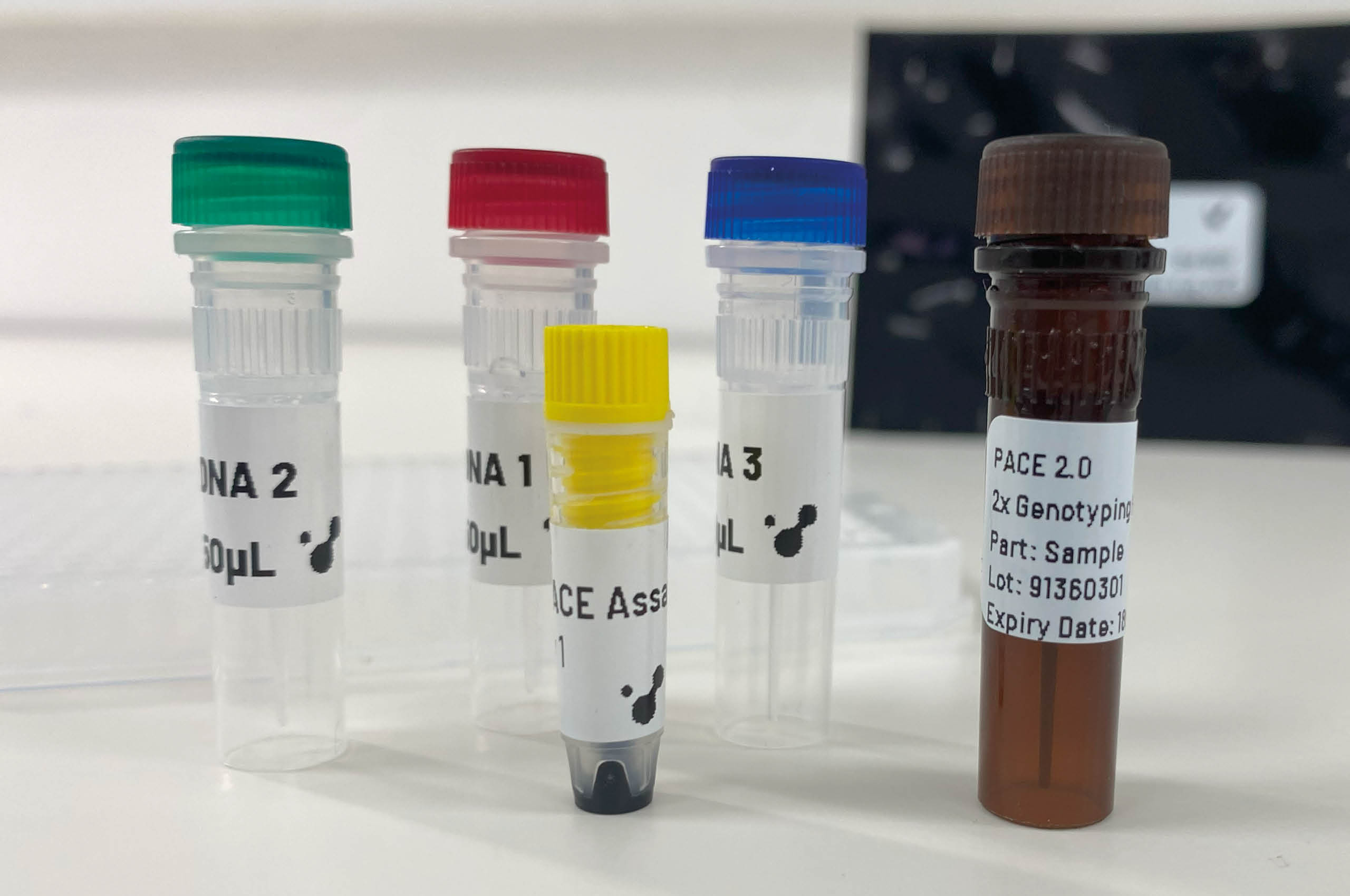
Everything you need to run a trial PACE® allele-specific PCR Genotyping Reaction on your existing lab equipment. Each PACE Trial Kit includes test DNA samples, PACE Genotyping Assays, PACE PCR Master Mix, and a comprehensive PACE Genotyping Trial Kit Manual.
Anyone who wants to try PACE genotyping reagents in their lab for the first time with a set of validated DNA samples, SNP assays and PACE Master Mix.
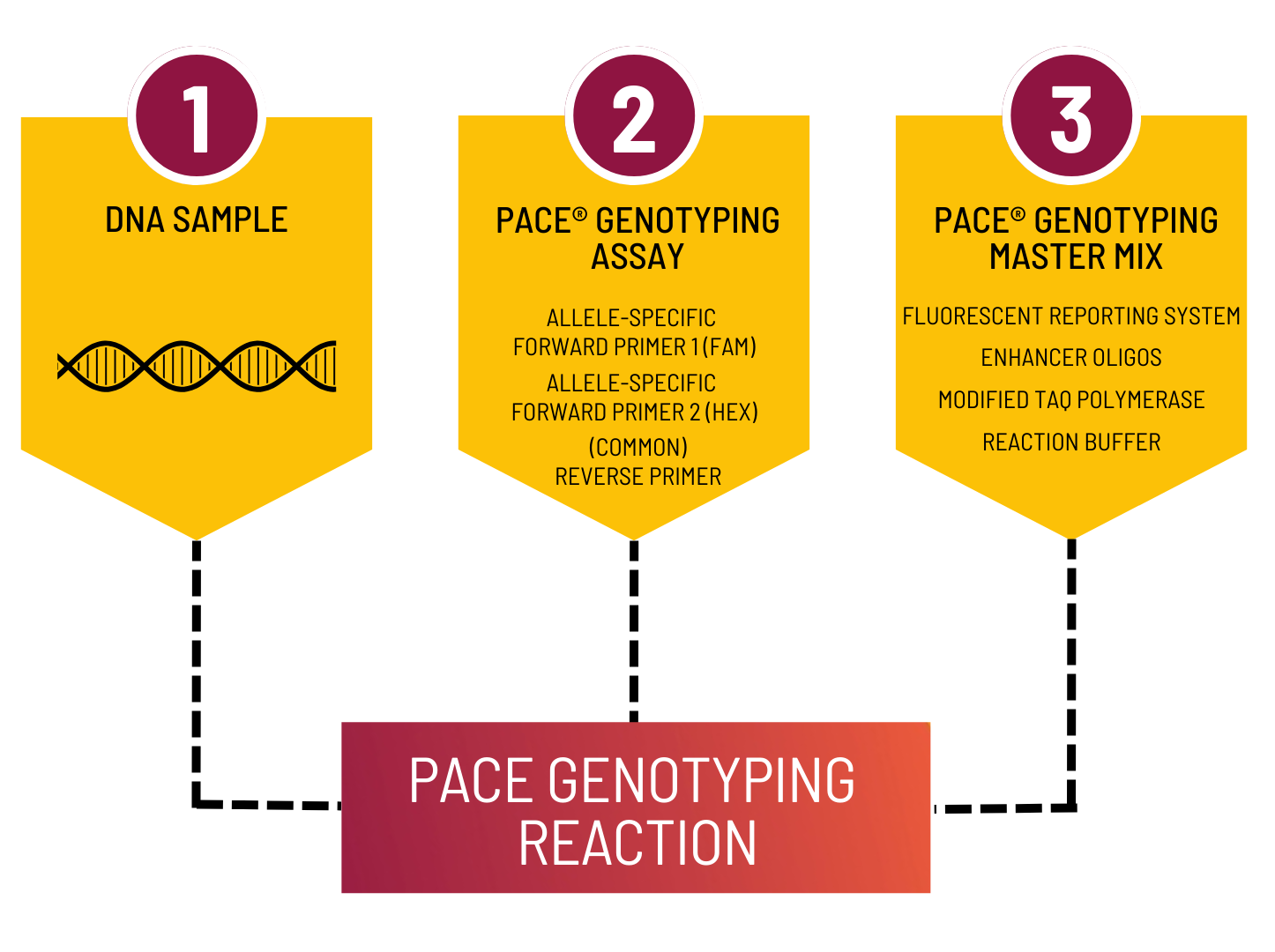
Step 1. Dispense each of the three trial DNA samples (DNA 1, 2 and 3) plus water (No Template Control) in triplicate onto a PCR plate using the suggested volumes.
Step 2. Combine appropriate volumes of PACE Genotyping Master Mix with PACE Genotyping Assay in a tube, as directed, then mix.
Step 3. Dispense the combined mixtures into each of the wells containing DNA using volumes indicated. Each test now contains a complete PACE Genotyping Reaction.
Step 4. Seal your PCR plate with an optically clear seal and centrifuge to ensure all components are at the bottom of the wells.
Step 5.Thermally cycle the reaction plate using the thermal cycling conditions provided.
Step 6. Read the plate and compare data produced with the expected results provided in the manual. Simple!
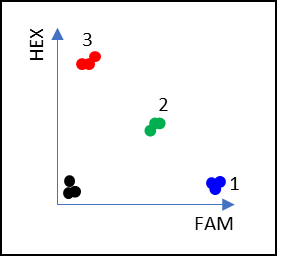
More information on the PACE genotyping chemistry and how it works can be found on the PACE Overview. PACE allele-specific PCR is used for the detection of SNPs, Indels and other sequence variants.

John joined KBioscience shortly after it was founded, in 2003, and became Head of Technical Development, building the company’s genotyping and DNA extraction product portfolio and service delivery until 2011 when it was acquired by LGC. Post-acquisition, John was appointed Head of Technical Group for LGC Genomics, in charge of all Research & Development and Technical Support activities for the company. In this role John continued to build on the high-quality products and services provided to the companies growing customer base.
During the 19 years John has worked in commercial R&D, he has co-invented numerous highly successful products including PACE®, ProbeSure, KASP™, KlearKall, KlearGene, KlearAmp and KlearTaq™, creating breakthrough offerings in genotyping and extraction and generating huge revenues for the companies he has worked in. In 2017, he joined forces with Steve Asquith and started 3CR Bioscience. John is dedicated to developing outstanding, innovative genotyping products and providing the very best technical support to customers globally.
Nisha has been innovating since the start of her career at Geneform Technologies developing Iso-thermal Genotyping Technologies. Nisha joined KBioscience in 2008, as Senior R&D Scientist and key account Technical Support Scientist, developing KASP and Klearkall performance and coinventing two further versions of KASP.
Nisha has more than 15 years’ experience working in molecular biology and genotyping technologies, with extensive experience in the areas of R&D, Quality Assurance and Customer Technical Support. She has technically assisted many giants of the industry with their protocol development and troubleshooting and continues to deliver high-quality support and guidance. In 2018, Nisha joined 3CR Bioscience as Operations Director where she continues to develop PACE and ProbeSure for an increasing range of applications, and to grow 3CR Bioscience’s new product pipeline. Nisha is dedicated to developing outstanding, innovative genotyping products and providing the very best technical support to customers globally.
You are currently viewing a placeholder content from Brevo. To access the actual content, click the button below. Please note that doing so will share data with third-party providers.
More InformationYou are currently viewing a placeholder content from Facebook. To access the actual content, click the button below. Please note that doing so will share data with third-party providers.
More InformationYou are currently viewing a placeholder content from X. To access the actual content, click the button below. Please note that doing so will share data with third-party providers.
More Information