The European Union has taken a major step towards accelerating agricultural innovation with the approval of its new regulatory framework for New Genomic Techniques (NGTs). The legislation, approved by the European Parliament in June 2026, is expected to make it easier for researchers and plant breeders to develop new crop varieties using modern genome editing technologies such as CRISPR.
For organisations working in plant genetics, crop improvement and agricultural biotechnology, this represents more than just a regulatory update. It signals a future where gene-edited crops can move through development more efficiently, increasing the demand for robust, scalable genotyping solutions that support every stage of the breeding pipeline.
A New Era for Plant Breeding Innovation
The new legislation marks a significant change in how gene-edited plants are regulated across the European Union. Instead of focusing solely on the technology used to create a plant, the framework places greater emphasis on the characteristics of the finished product.
Under the new rules, plants developed using New Genomic Techniques will fall into two categories:
- NGT-1 plants, containing genetic changes that could also occur naturally or through conventional breeding, will benefit from a simplified regulatory pathway similar to traditionally bred crops.
- NGT-2 plants, involving more complex genetic modifications, will continue to undergo the existing GMO authorisation and risk assessment process.
The revised framework is expected to encourage greater investment in plant breeding by providing increased regulatory clarity and reducing barriers to developing crops with valuable traits such as disease resistance, drought tolerance, improved yields and reduced dependence on chemical crop protection products.
These developments support the EU’s long-term sustainability objectives while enabling breeders to respond more quickly to global challenges including climate change, food security and evolving plant diseases.
Faster Innovation Requires Faster Genotyping
While the new regulation is designed to accelerate innovation, it also highlights a growing challenge for researchers developing gene-edited crops.
Every genome editing project can generate hundreds—or even thousands—of candidate plants that must be screened to identify those carrying the desired genetic change. Relying solely on sequencing every sample can quickly become costly, time-consuming and impractical, particularly during early-stage screening.
As breeding programmes expand, researchers need genotyping methods that deliver rapid, reliable results while keeping project costs under control.
This is where high-throughput PCR-based genotyping plays a vital role.
Accelerating Genome Editing with PACE® Genotyping
At 3CR Bioscience, we’re committed to helping researchers scale their genotyping workflows without compromising data quality.
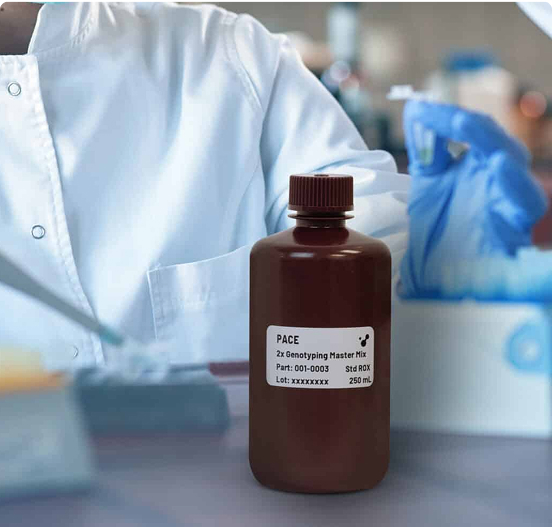
PACE® (PCR Allelic Competitive Extension) genotyping provides a fast, accurate and cost-effective method for screening large populations of gene-edited plants before confirming selected candidates by sequencing.
By using PACE® as an initial screening tool, researchers can:
- Rapidly screen hundreds or thousands of samples.
- Detect single nucleotide polymorphisms (SNPs), insertions, deletions and gene knockouts.
- Reduce reliance on expensive sequencing during primary screening.
- Work efficiently with crude DNA preparations.
- Shorten breeding timelines while reducing overall project costs.
- Focus sequencing resources on the most promising candidates.

This tiered approach allows breeding programmes to increase throughput, improve laboratory efficiency and make faster decisions throughout the crop development process.
Read our gene editing Application note!
Supporting the Future of Sustainable Agriculture

As genome editing becomes an increasingly important tool for developing resilient crop varieties, efficient genotyping will remain essential for turning laboratory discoveries into commercially successful breeding programmes.
Whether researchers are developing disease-resistant cereals, drought-tolerant vegetables or climate-resilient crop varieties, scalable molecular screening helps ensure promising edits are identified quickly and accurately.
Helping Plant Breeders Move Faster
The EU’s approval of the New Genomic Techniques regulation represents an exciting opportunity for innovation across agriculture. As gene editing becomes more widely adopted, the ability to screen larger populations efficiently will become a key competitive advantage.
At 3CR Bioscience, we support researchers with affordable, high-performance genotyping reagents that help accelerate plant breeding programmes from discovery through to commercial development.
If you’re looking to improve throughput, reduce screening costs and streamline your genome editing workflow, discover how PACE® genotyping can support your next plant breeding project.