Blog

ADVANTAGES OF SNP GENOTYPING WITH ALLELE-SPECIFIC PCR FOR VALIDATING GENETIC MARKERS FOR BREEDING PROGRAMS

ADVANTAGES OF SNP GENOTYPING WITH ALLELE-SPECIFIC PCR FOR VALIDATING GENETIC MARKERS FOR BREEDING PROGRAMS

In genetic research, particularly within breeding programs designed to boost crop yields or enhance animal traits, the identification and validation of genetic markers are crucial. Various methods exist for validating these markers, but SNP genotyping with allele-specific PCR and PACE® is particularly effective, especially following marker discovery via GWAS and Genotyping by Sequencing (GBS). This blog explores why SNP genotyping with allele-specific PCR is considered the best approach for these purposes.

The Power of PCR Genotyping

PCR genotyping with PACE and other similar technologies stands out for its exceptional advantages in the validation of genetic markers. It is the preferred method for moderate SNP/Indel marker assays, typically ranging from 1 to about 100 markers, across various samples. Here are key reasons for its preference:

  1. Precision and Specificity: Allele-specific PCR enables precise amplification of target alleles, ensuring high specificity in SNP variation detection, which is essential for accurate marker validation.
  2. High Throughput: Even with a substantial number of markers, PCR genotyping can be performed efficiently and quickly, making it ideal for screening multiple samples simultaneously.
  3. Cost-Effectiveness: In comparison to GBS, PCR genotyping is more affordable for smaller-scale projects. The per-sample cost is significantly lower, making it suitable for routine marker screening in breeding programs.
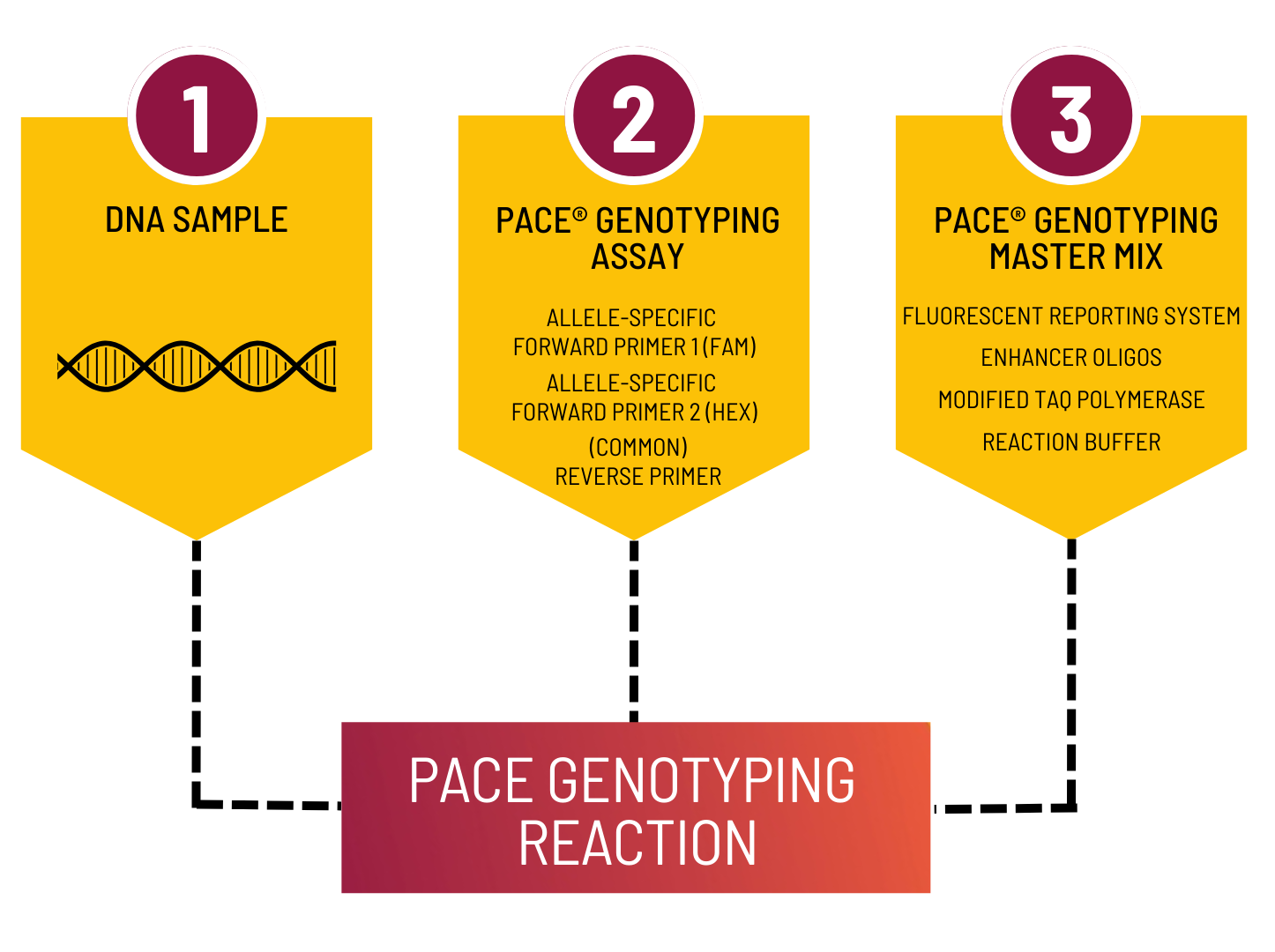
PACE genotyping reaction, 3 components required. DNA sample, PACE genotyping Assay, PACE Genotyping Master mix .

Limitations of GBS in Marker Validation

Although GBS is essential for discovering SNPs and other variants, it has several limitations for marker validation in breeding programs:

  1. Cost Considerations: NGS requires significant upfront and operational investment, which may not be feasible for smaller-scale genotyping projects with limited markers and samples.
  2. Data Overload: Sequencing generates large volumes of data, often more than needed for routine marker validation and screening, making data processing and analysis time-consuming and resource intensive.
  3. Efficiency Concerns: Solely using GBS for genotyping can be inefficient for breeding programs, as it may not match the required scale and scope for marker validation and routine screening, potentially delaying decision-making processes.

To improve crop resilience, yield, and desirable animal traits, validating genetic markers is crucial. While GBS is valuable for discovering SNPs, SNP genotyping with allele-specific PCR is the preferred method for marker validation and routine screening in breeding programs. By focusing on efficiency and cost-effectiveness, researchers and breeders can expedite progress toward their breeding goals and optimize resource use.

Flexibility and Customization

Allele-specific PCR offers a high degree of flexibility and customization to meet the specific needs of breeding programs. Researchers can design primers that target specific SNP loci, which allows for efficient investigation of known genetic variations related to breeding goals. This customization enables breeders to concentrate their genotyping efforts on markers associated with desired traits, streamlining the selection process and enhancing breeding outcomes. Furthermore, PCR genotyping’s scalability allows for seamless integration into high-throughput genotyping systems, accommodating various sample sizes and marker panels in different projects.
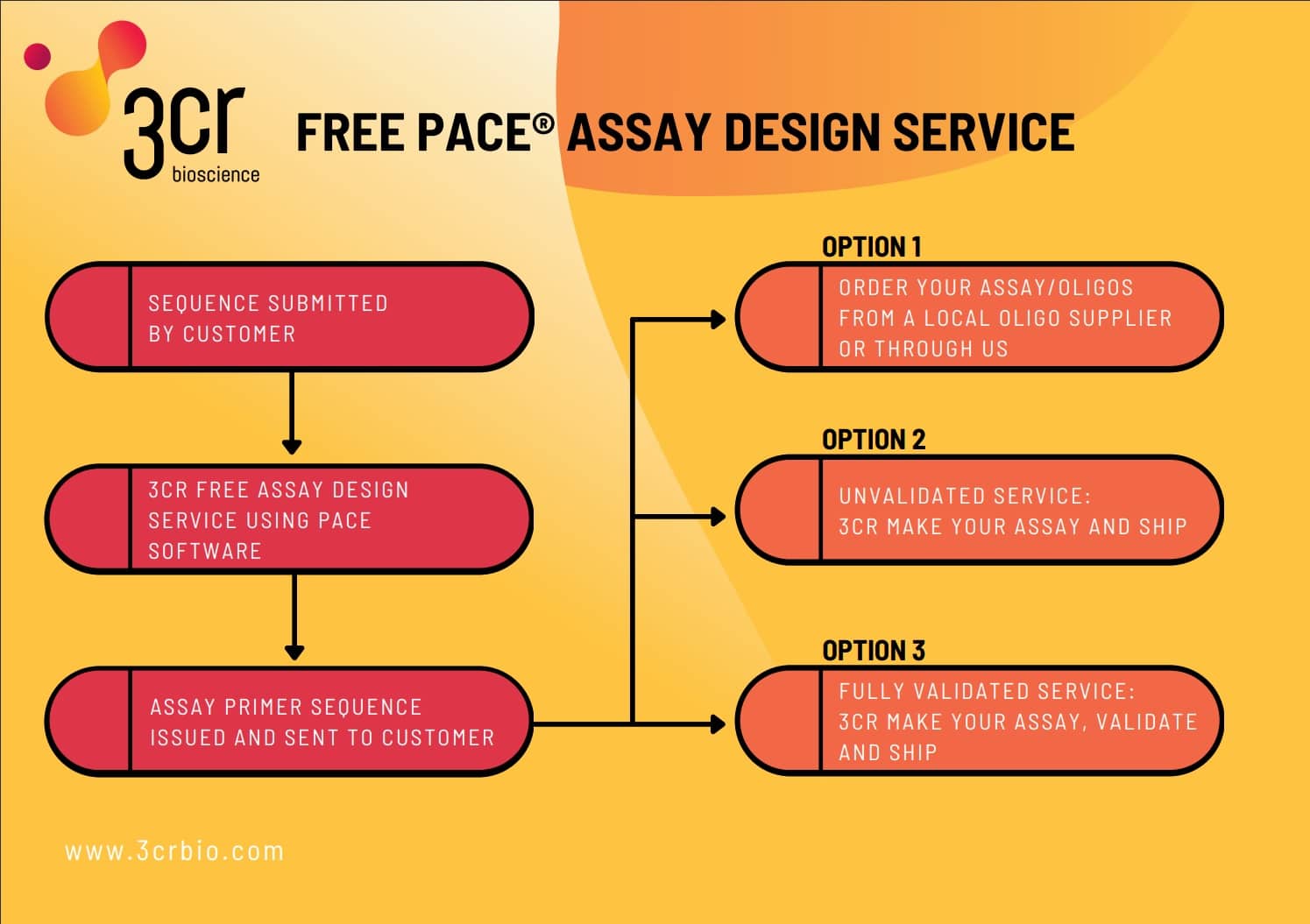
Free PACE Assay Design Service

Validation of Marker-Trait Associations

The validation of marker-trait associations is vital for ensuring the effectiveness of genetic markers in breeding programs. SNP genotyping using allele-specific PCR allows researchers to confirm the associations between specific SNP markers and desired traits with high confidence. By methodically screening a diverse range of samples from different genetic backgrounds and environments, breeders can robustly validate the predictive power of marker alleles for targeted traits. This rigorous validation process solidifies the foundation of marker-assisted selection strategies, enabling breeders to prioritize individuals with favourable genetic profiles for breeding.

Integration with Genomic Selection

Incorporating validated genetic markers into genomic selection models enhances the precision and efficiency of breeding programs. SNP genotyping with allele-specific PCR provides the necessary genotypic data to inform genomic prediction models, facilitating the estimation of genomic breeding values for selection candidates. Utilizing marker genotypes allows breeders to predict breeding values more accurately, speeding up the genetic improvement process for target traits. This integration underscores the critical role of SNP genotyping with allele-specific PCR in advancing genetic improvement in diverse crop and animal populations.

Conclusion

SNP genotyping with allele-specific PCR is the preferred method for validating genetic markers in breeding programs, offering unmatched sensitivity, specificity, and customization options. By leveraging PCR genotyping, researchers and breeders can efficiently validate marker-trait associations, enhance genomic selection strategies, and expedite progress toward breeding objectives. In a field where efficiency and precision are crucial, adopting SNP genotyping with allele-specific PCR is a strategic investment in the future of agricultural and livestock breeding and genetic improvement.


MORE POSTS

Automated Pipetting vs. Manual Pipetting: Which Is Right for Your Lab?
Discover when manual pipetting is enough—and why automated pipetting with 3CR’s GeneArrayer and PACE® genotyping delivers superior speed, accuracy, and scalability.
High-Throughput PCR in CRISPR Screening and Genome Editing Verification
Discover how high-throughput PCR using PACE® genotyping accelerates CRISPR screening and genome editing verification across large sample populations.
Understanding the genetics of important traits in hemp to help breed improved cultivars
Learn how Cornell University uses PACE® SNP genotyping to accelerate hemp breeding—enabling early trait selection, sex determination, and cost-effective genetic screening.

Our product portfolio for your PCR genotyping workflow

Our portfolio of products and services include PACE® genotyping chemistry, instruments, and lab services to streamline every step of your workflow. Designed for life sciences, biotech, and agricultural research, our high-performance reagents, reliable instruments, and expert lab support help you achieve accurate, consistent results while reducing time and costs – making science affordable.

[fibosearch]
This field is for validation purposes and should be left unchanged.
Name(Required)

Contact us

Stay up to date with all things 3CR. 

Sign up now to receive insights, updates 
and industry case studies. 

This field is for validation purposes and should be left unchanged.
Name(Required)

MEET OUR TEAM

Steve AsquithManaging Director
Steve began his career in the Genetics Division of GlaxoSmithKline, as part of the team establishing GSK’s high-throughput core genotyping laboratory. Steve joined KBioscience when it was first founded in 2002 and was a key driver in taking the company from a small start-up to a multi-national service laboratory, quickly growing the company’s revenue to over $7.5M p.a. Following the acquisition of Kbioscience by LGC in 2011, Steve was appointed Global Director of Operations for LGC Genomics, responsible for over 100 staff in Europe and N. America, successfully elevating the genotyping products and service business. Steve held a crucial leadership role until he left in 2016. In 2017 Steve joined forces with John Holme to create 3CR Bioscience, a new company with a mission to deliver outstanding, customer-focused genotyping products with innovation and affordability at its core.
Dr. John HolmeTechnical Director

John joined KBioscience shortly after it was founded, in 2003, and became Head of Technical Development, building the company’s genotyping and DNA extraction product portfolio and service delivery until 2011 when it was acquired by LGC. Post-acquisition, John was appointed Head of Technical Group for LGC Genomics, in charge of all Research & Development and Technical Support activities for the company. In this role John continued to build on the high-quality products and services provided to the companies growing customer base.

During the 19 years John has worked in commercial R&D, he has co-invented numerous highly successful products including PACE®, ProbeSure, KASP™, KlearKall, KlearGene, KlearAmp and KlearTaq™, creating breakthrough offerings in genotyping and extraction and generating huge revenues for the companies he has worked in. In 2017, he joined forces with Steve Asquith and started 3CR Bioscience. John is dedicated to developing outstanding, innovative genotyping products and providing the very best technical support to customers globally.

Dr. Nisha JainOperations Director

Nisha has been innovating since the start of her career at Geneform Technologies developing Iso-thermal Genotyping Technologies. Nisha joined KBioscience in 2008, as Senior R&D Scientist and key account Technical Support Scientist, developing KASP and Klearkall performance and coinventing two further versions of KASP.

Nisha has more than 15 years’ experience working in molecular biology and genotyping technologies, with extensive experience in the areas of R&D, Quality Assurance and Customer Technical Support. She has technically assisted many giants of the industry with their protocol development and troubleshooting and continues to deliver high-quality support and guidance. In 2018, Nisha joined 3CR Bioscience as Operations Director where she continues to develop PACE and ProbeSure for an increasing range of applications, and to grow 3CR Bioscience’s new product pipeline. Nisha is dedicated to developing outstanding, innovative genotyping products and providing the very best technical support to customers globally.

Nazma SaffinGeneral Manager
For 20 years Nazma Saffin has worked and gained extensive expertise within the genotyping sector. Working at Kbioscience and then LGC, she has held operational leadership posts responsible for manufacturing and laboratory services. With experience of ISO 9001 implementation, production scale up and LEAN operations, Nazma has successfully led highly profitable production departments. Joining 3CR Bioscience in 2022, Nazma is committed to delivering operational excellence.
Greig PollandAutomation and Support Manager

Greig is a hands-on automation specialist and team leader with a strong background in laboratory and industrial automation. He has spent over 25 years developing, installing, and supporting automated systems that transformed laboratory workflows. During this time, Greig worked closely with scientists and engineers to tailor automation solutions for genotyping and molecular biology, an experience that sparked his lasting passion for combining technology with practical science.

Since then, Greig has built on that foundation through leadership roles where he leads automation and support operations. He’s known for being approachable, commercially minded, and deeply committed to helping teams and customers get the best from their technology.

Whether managing a complex automation rollout or helping a customer troubleshoot in real time, Greig brings a thoughtful, collaborative approach that keeps people ,not just machines, at the centre of what he does.