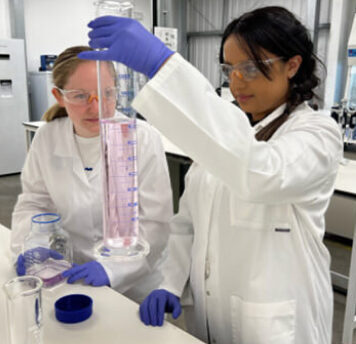
As genotyping demands continue to scale, laboratories are under increasing pressure to deliver more data, faster, and at lower cost—without compromising quality. PCR assay miniaturisation has emerged as a key strategy to meet these challenges, enabled by advances in plate design, reagent chemistry, and automation.
Moving from 96-well formats into 384- and 1536-well PCR plates is no longer just a throughput upgrade—it represents a shift towards more efficient, precise, and sustainable molecular workflows.
The Real Value of Miniaturisation
Miniaturisation is often framed purely in terms of reduced reaction volumes, but in practice it delivers broader operational advantages. By scaling down reactions and scaling up density, laboratories can:
- Generate significantly more data per run
- Reduce reliance on high-cost reagents
- Minimise plastic consumption and laboratory waste
- Improve consistency by reducing manual handling
Crucially, miniaturisation also enables more sophisticated experimental designs—supporting applications such as large-scale SNP genotyping, CRISPR screening, and population studies.
384-Well PCR Plates: The Foundation of Miniaturised Workflows
For many laboratories, 384-well plates represent the first and most accessible step into miniaturisation.
Standard 384-well plates provide a straightforward transition from 96-well formats, maintaining compatibility with most existing thermocyclers and liquid handling systems.
Slimline 384-well plates, however, are where miniaturisation begins to deliver meaningful efficiency gains. Their reduced well volume enables reaction sizes in the ~1.6–2.0 µL range, significantly lowering reagent usage while maintaining thermal uniformity and data quality.

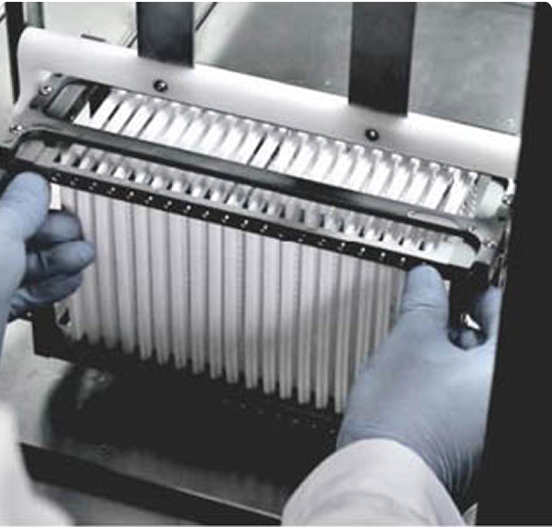
3CR Bioscience’s slim-profile 384-well PCR plates are specifically engineered for these workflows—offering low fluorescence background, high thermal consistency, and seamless compatibility with automated liquid handling systems. Designed with precision and reproducibility in mind, they support reliable performance even at very low reaction volumes.
Scaling Further: The Role of 1536-Well PCR Plates
For laboratories operating at very high throughput, 1536-well PCR plates provide a step-change in efficiency.

With four times the density of a 384-well plate in the same SBS footprint, they enable:
- Ultra-high-throughput genotyping in a single run
- Reaction volumes as low as ~0.5 µL
- Dramatic reductions in cost per data point
3CR Bioscience’s 1536-well PCR plates are designed to maintain consistent amplification at sub-microlitre volumes. Manufactured from high-quality polypropylene and compatible with laser sealing and automation systems, they provide the reliability required for large-scale screening and genotyping workflows.
The Critical Role of Reagent Chemistry
As reaction volumes decrease, the tolerance for variability also narrows. PCR chemistries must perform reliably under increasingly demanding conditions—handling low DNA inputs, reduced volumes, and high-throughput processing.
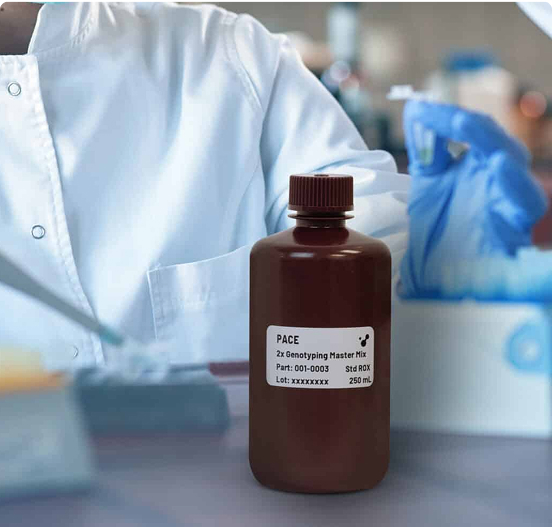
3CR Bioscience’s PACE® genotyping chemistry has been developed specifically with scalability in mind. Using a patented fluorescent reporting cassette, it converts allele-specific PCR events into robust, machine-readable signals—without the need for labelled probes. This makes it particularly well suited to large-scale genotyping projects.
PACE® Master Mixes are:
- Scalable – validated from <1 µL to full-volume reactions
- Platform agnostic – compatible with 96-, 384-, and 1536-well formats
- Flexible – available with Standard, High, Low, or No ROX options
- Cost-efficient – delivering high-quality data without expensive probe-based chemistries

They are also fully compatible with existing thermocyclers, fluorescence readers, and liquid handling systems—allowing seamless integration into established workflows.
Multiplexing: Increasing Data Yield Without Increasing Workload
Miniaturisation is not only about reducing volume—it’s also about maximising the amount of data generated per reaction.

PACE Multiplex Master Mix extends this concept further by enabling the detection of multiple SNPs within a single reaction. This allows researchers to effectively double data output while reducing reagent use, plastic consumption, and processing time.
Compatible with standard qPCR instruments capable of detecting common fluorophores (e.g. FAM, HEX, ATTO dyes), PACE Multiplex supports a wide range of applications—from disease research to seed testing and marker-assisted selection.
The result is a workflow that is not only faster and more cost-efficient, but also more sustainable.
Why Automation Becomes Essential
Beyond 384-well formats, manual pipetting quickly becomes impractical. At sub-microlitre volumes, even small inconsistencies can lead to significant variability.
Automated liquid handling addresses this by delivering:
- Nanolitre- to microlitre-scale precision
- High reproducibility across plates and runs
- Reduced risk of human error and contamination
3CR Bioscience’s GeneArrayer liquid handling system is designed specifically for miniaturised workflows, enabling precise low-volume dispensing, automated plate handling, and integrated sealing within a single platform.

Miniaturised PCR workflows require instrumentation capable of maintaining precision and sensitivity at low volumes.
The GeneCycler thermal cycler supports both 384- and 1536-well plate formats, enabling high-throughput cycling with excellent temperature uniformity.

Meanwhile, the GeneScanner provides rapid, high-sensitivity fluorescence detection—even at reaction volumes below 1 µL—using full-field imaging to capture accurate data across entire plates in seconds.

Together, these systems ensure that reduced reaction volumes do not compromise data quality or throughput.
From Automation to Full Workflow Integration: Introducing HyperGeno™
As throughput demands increase further, many laboratories move beyond standalone automation towards fully integrated workflows.
HyperGeno™ represents this next step—an end-to-end genotyping solution that brings together sample preparation, PCR setup, amplification, detection, and data analysis into a single, cohesive system.
At its core, HyperGeno™ integrates four key modules:

HyperArrayer – an ultra-high-throughput liquid handling platform capable of preparing up to 153,600 reactions in 8 hours, with nanolitre precision dispensing and optional sample drying to further reduce reagent usage

HyperCycler – a high-efficiency thermal cycling system supporting both 384- and 1536-well formats, with water-based heating for improved energy efficiency and reduced cycle times
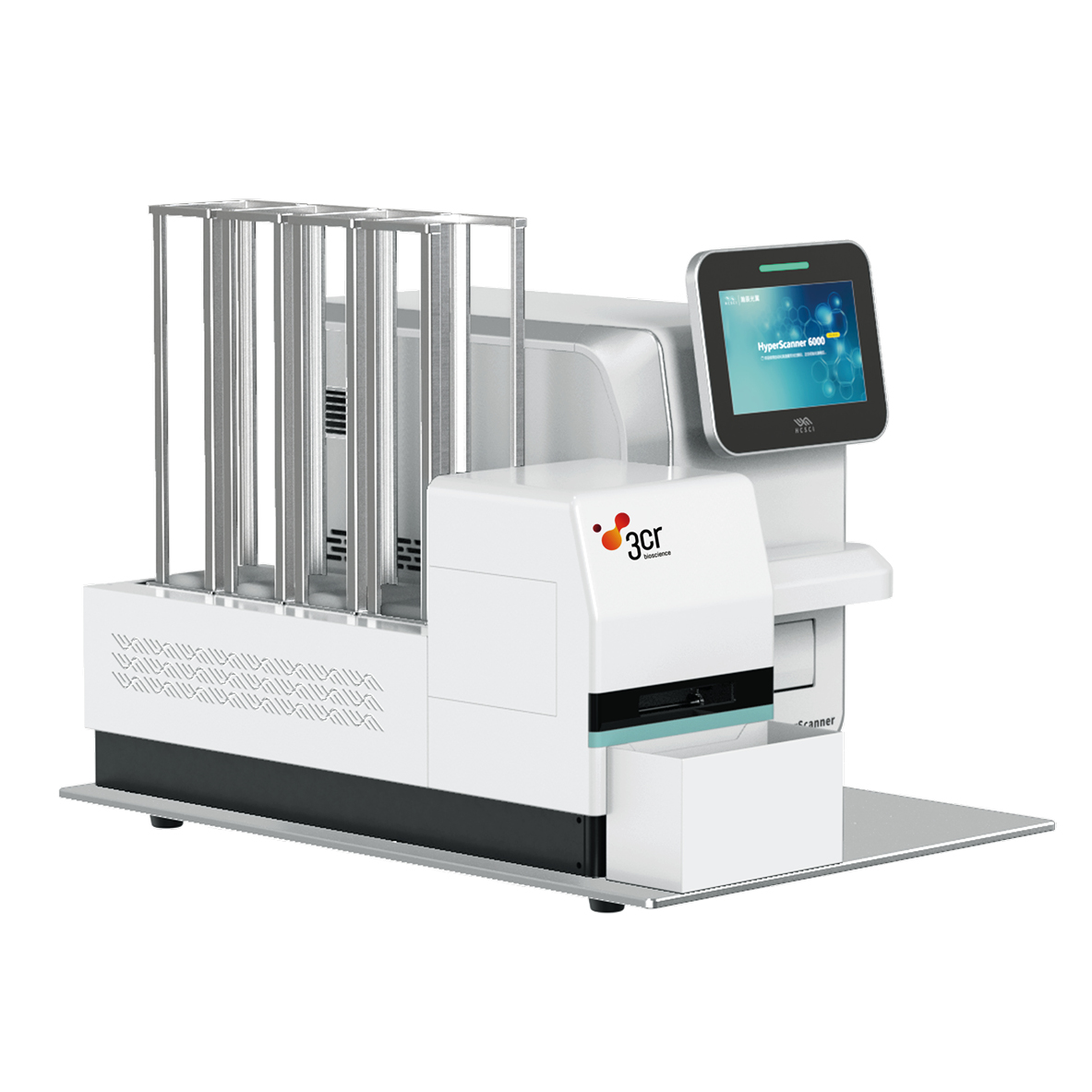
HyperScanner – a high-sensitivity, multi-channel detection system capable of accurately reading fluorescence signals from reaction volumes as low as 0.8 µL in seconds

HyperMaster – an advanced data management platform supporting multi-user environments and high-throughput data analysis
Together, these components enable true walk-away automation—dramatically reducing manual intervention while ensuring exceptional consistency and reproducibility.
HyperGeno™ is designed not only for scale, but for efficiency. By combining miniaturised reaction volumes, automated processing, and integrated data handling, it enables laboratories to:
- Process hundreds of plates in a single workflow
- Reduce reagent and consumable usage
- Minimise variability across runs and operators
- Accelerate time from sample to result
This systems-level approach is particularly valuable for large-scale genotyping operations, where consistency, throughput, and data integrity are critical.
Balancing Throughput, Cost, and Sustainability
One of the often-overlooked benefits of PCR miniaturisation is its impact on sustainability.
Reducing reaction volumes lowers reagent consumption, while higher-density plates decrease plastic usage. Multiplexing further enhances these gains by reducing the total number of reactions required.
Automation also contributes by optimising resource use and reducing waste associated with manual workflows.
These combined efficiencies allow laboratories to scale operations while reducing both costs and environmental impact.
A Systems-Level Approach to Miniaturised Genotyping
Successful miniaturisation is not achieved through a single component—it requires a systems-level approach.
At 3CR Bioscience, reagents, consumables, and instrumentation are developed with real-world high-throughput genotyping workflows in mind. This ensures compatibility, reliability, and performance across every stage—from assay design to data analysis.
To further support customers, 3CR Bioscience also offers free assay design services with master mix purchases—helping optimise assays for low-volume, high-throughput applications from the outset.
Looking Ahead
PCR genotyping assay miniaturisation is rapidly becoming the standard for laboratories handling large sample volumes. With the continued evolution of plate formats, chemistries, and automation technologies, the barriers to adoption are lower than ever.
Whether transitioning to 384-well slimline plates or scaling up to 1536-well ultra-high-throughput workflows, the key lies in selecting technologies that deliver precision, flexibility, and reliability at every stage.
3CR Bioscience – Enabling high-throughput genotyping through precision-engineered reagents, consumables, and fully integrated automation