Genotyping is a vital tool in modern biology, helping researchers analyze DNA with speed and precision. From detecting disease mutations to improving crops, the applications of genotyping are wide-ranging. But what is genotyping used for, and how do methods like SNP assays deliver value? In this blog, we explore key genotyping applications in research, medicine, and agriculture and how 3CR Bioscience’s PACE® reagents and tools make workflows faster and more cost-effective.
What Is Genotyping?
Genotyping is the process of examining an organism’s DNA to identify genetic differences, such as single nucleotide polymorphisms (SNPs), insertions, or other variants. These single-base changes, identified through genotyping SNPs, allow scientists to pinpoint the precise genetic variations responsible for observable traits or disease susceptibility. Genotyping focuses on known genetic markers rather than sequencing the entire genome, which makes genotyping faster, more accurate, and cost-effective. This method is widely used in research, medicine, and agriculture to study traits, detect mutations, and support precision breeding.
Key Genotyping Targets
- Single Nucleotide Polymorphisms (SNPs)
- Insertions/Deletions (Indels)
- Structural variants or copy number variations (CNVs)
Key Genotyping Targets
SNPs are the most abundant type of genetic variation in plants, animals, and humans. Accurately genotyping SNPs provides researchers with a detailed view of how these single-base differences influence phenotype, disease risk, and response to environmental factors.
This insight drives marker-assisted selection in agriculture, supports personalized medicine, and enables population-level genetic studies—all at scale and lower cost when using PCR-based chemistries like PACE®.
What Is Genotyping Used For?
Genotyping is used to identify and analyze genetic variations that influence health, traits, and biological processes. By focusing on known DNA markers, it enables researchers and clinicians to make fast, accurate discoveries without sequencing entire genomes.
Main Applications of Genotyping
- Medical diagnostics – Detect disease-linked mutations, guide personalized medicine, and predict treatment responses.
- Agriculture – Improve crop resilience, support livestock breeding, and track desirable traits.
- Research – Study genetic diversity, population genetics, and evolutionary biology.
- Pathogen detection – Identify viral and bacterial strains with high precision.
Genotyping SNPs
Genotyping SNPs (single nucleotide polymorphisms) means identifying single-base changes in DNA that make individuals genetically unique. SNPs are the most common type of genetic variation, and analyzing them helps researchers link genes to traits, diseases, and drug responses.
Genotyping Methods
Genotyping methods are the techniques used to identify genetic variations in DNA, such as SNPs, insertions, and structural changes. These methods differ in speed, cost, and the level of detail they provide, making each suitable for specific applications in research, medicine, and agriculture.
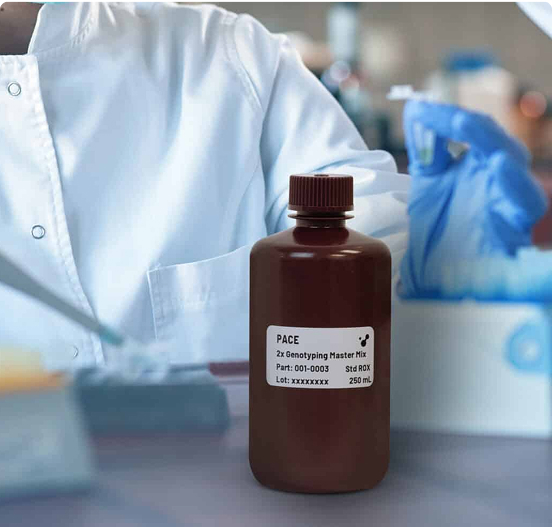
PCR-based genotyping, especially using allele-specific chemistries like 3CR Bioscience’s PACE® (PCR Allele Competitive Extension), offers a rapid and scalable method for variant detection. While sequencing covers large genomic regions, PCR genotyping targets specific regions and variants – making it ideal for high-throughput screening of large sample sets.
Key Genotyping Applications in Agrigenomics
Marker-Assisted Selection (MAS)
Marker-Assisted Selection is one of the key genotyping applications in agriculture and breeding. By using PCR-based genotyping, scientists can quickly identify plants or animals with valuable traits like drought tolerance, disease resistance, or higher yield. This makes breeding programs faster and more precise, reducing the guesswork in crossbreeding. MAS also complements newer approaches such as gene editing and speed breeding, helping researchers develop stronger and more resilient varieties.
Validation of Marker-Trait Associations
Before a genetic marker can be applied in breeding, it needs to be validated to ensure accuracy. PCR genotyping with allele-specific primers offers a cost-effective and reproducible way to confirm trait–marker associations across different populations.
For example, researchers at North Carolina State University used high-throughput SNP genotyping with PACE® chemistry to validate resistance markers in peanut breeding. This approach improved the efficiency of developing new cultivars and strengthened marker-assisted selection workflows. Read more about their workflow in our case study.
Genomic Selection (GS)
Going beyond individual markers, Genomic Selection leverages high-density SNP panels to predict the breeding value of individuals based on genome-wide data. This approach is transforming crop and livestock breeding by improving selection accuracy and reducing the need for phenotyping.
Sex Determination in Crops and Livestock
Accurate early sex identification can greatly optimize breeding strategies. PCR genotyping has been used in dioecious species like hops to distinguish male and female plants at the seedling stage. Similar techniques apply in poultry and aquaculture.
PACE assays enable robust detection of sex-linked markers with minimal DNA input, empowering early, informed selection.
Cross Verification and Line Purity Testing
Maintaining genetic integrity is critical. PCR genotyping verifies parentage, hybrid status, and line purity, ensuring reliability in seed production and breeding pipelines.
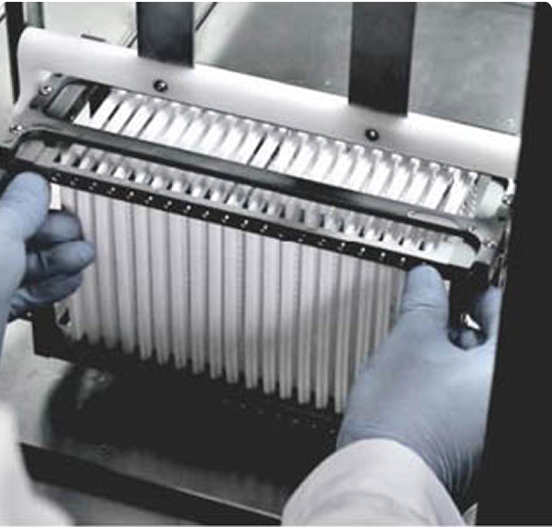
PACE genotyping assays, paired with automation platforms like the GeneArrayer™ and GeneScanner™, enable high-throughput testing, even with crude DNA samples.
CRISPR Genome Editing: High-Throughput Screening with PACE®
While CRISPR-Cas technologies allow precise genome editing, validating those edits can be a bottleneck. PACE chemistry is ideally suited to detect small insertions, deletions, and SNPs introduced by CRISPR, quickly and cost-effectively.
PACE assays:
- Require minimal DNA input
- Work reliably with crude lysates
- Support multiplexing for multiple edits in one reaction
This makes them ideal for screening large volumes of edited organisms in breeding and research. Read our app note on High-Throughput Screening of Gene Edits Using PACE AlleleSpecific Genotyping for Agriculture and Life Sciences.
Applications in Life Sciences and Biomedical Research
Gene Function Studies & Knockout Validation
In model organisms like mice and zebrafish, genotyping confirms transgene presence, gene knockouts, or CRISPR edits. Allele-specific primers enable rapid and scalable detection of genomic changes.
Population Genetics and Evolutionary Biology
Genotyping is vital in understanding genetic diversity within and between populations, particularly for endangered species. SNP-based genotyping helps:
- Identify genetic bottlenecks
- Monitor inbreeding levels
- Guide conservation strategies
In non-model organisms where sequencing data may be limited, PCR genotyping provides an accessible entry point for population-level studies.
PACE’s compatibility with minimal and degraded DNA samples common in fieldwork, makes it a useful tool for wildlife and ecological genotyping.
Pathogen Detection and Variant Monitoring
Genotyping plays a key role in tracking pathogen variants.
PACE® assays, with their rapid turnaround and compatibility with high-throughput instruments, have been adapted for such pathogen genotyping applications delivering speed, specificity, and scalability.
While whole-genome sequencing is powerful for comprehensive viral analysis, it can be cost-prohibitive and logistically complex for large-scale surveillance. PCR genotyping offers a practical alternative by targeting specific SNPs for rapid identification of viral strains.
Case Study: SARS-CoV-2 Variant Detection in Human Populations
During the COVID-19 pandemic, tracking emerging variants became a public health priority. In partnership with the University of Bristol, 3CR Bioscience developed a PACE OneStep RT-PCR workflow to genotype SARS-CoV-2 directly from RNA samples. Using a panel of 19 SNPs, the team successfully identified 59 viral genotypes, enabling fast, affordable variant tracking.
The method has been adopted by public health labs globally demonstrating the value of targeted genotyping in pandemic response. Read our Case Study on Human Genetics.
Genotyping in Industrial Applications
Quality Control in Biomanufacturing
In industrial biotechnology and biologics production, genetic stability is critical. Genotyping is used to confirm that engineered microbial strains or mammalian cell lines retain their desired genetic configuration throughout production cycles.
PACE® assays provide a simple way to genotype key loci in production strains, helping companies maintain consistency and avoid costly batch failures.
Strain Verification and Biosecurity
For genetically modified organisms (GMOs), genotyping supports trait verification and regulatory compliance. In biosecurity settings, SNP genotyping can identify contaminating strains or trace the source of production issues.
DNA Extraction: A Critical First Step
Robust genotyping starts with high-quality DNA. 3CR Bioscience offers high-efficiency automated DNA extraction instruments and partners with trusted providers of automated extraction reagents and systems that support:
- High-throughput prep for hundreds or thousands of samples daily
- Compatibility with plant, animal, human, and microbial samples
- Low hands-on time and consistent yields
In many plant breeding pipelines, crude DNA extraction works seamlessly with PACE reagents—reducing costs and speeding up workflows.
Instrumentation for High-Throughput Genotyping
To keep pace with modern demands, labs need automation-ready, scalable platforms for SNP and Indel genotyping. 3CR Bioscience supports integration with:
- Liquid handling robots
- Thermal cyclers and qPCR machines
- Fluorescent plate readers for endpoint detection
- 1536-sample systems for ultra-high-throughput processing
These platforms allow users to scale from 96 to 1536-well formats and beyond, making them ideal for population-level studies, MAS pipelines, and contract genotyping services.
When combined with PACE® chemistry, these systems provide high sensitivity, low cost per data point, and minimal error rates — empowering labs to process thousands of genotypes per day with confidence.
Conclusion
Whether you’re validating CRISPR edits, tracking population diversity, or managing large-scale breeding programs, understanding what genotyping is used for—and selecting the right technology—can significantly enhance your research outcomes.
For researchers looking for a scalable, cost-effective, and accurate approach to genotyping, PCR-based methods provide compelling advantages. And with 3CR’s suite of genotyping technologies, the tools to accelerate your research are readily available.
Explore 3CR Bioscience’s
Want to learn more? Explore 3CR’s PACE Reagents, automation platforms, and DNA extraction solutions to support your next genotyping project.