When comparing genotyping vs sequencing, researchers must decide how deeply they need to analyze genetic variation. Genotyping identifies known genetic variants at predefined positions in the genome, while DNA sequencing reads the exact nucleotide order to uncover both known and novel variation. The right choice depends on whether the study aims to validate known markers at scale or to discover new variants.
This guide explains what genotyping is, what DNA sequencing is, how genotyping by sequencing (GBS) bridges the two approaches, and how to choose the most cost-effective method for plant breeding, biomedical research, and high-throughput screening.
What Is Genotyping?
Genotyping is a molecular biology method that identifies specific DNA variants at known positions in the genome. Rather than determining the complete DNA sequence, genotyping analyzes predefined genetic markers, most commonly single nucleotide polymorphisms (SNPs) and insertions/deletions (Indels), to determine which alleles are present in an individual sample.
In the context of genotyping vs sequencing, genotyping is a targeted approach. It answers a focused question: Does this sample contain a specific genetic variant? DNA sequencing, by contrast, reads the exact nucleotide order of a DNA fragment or entire genome, enabling the discovery of both known and novel variants.
How Genotyping Works
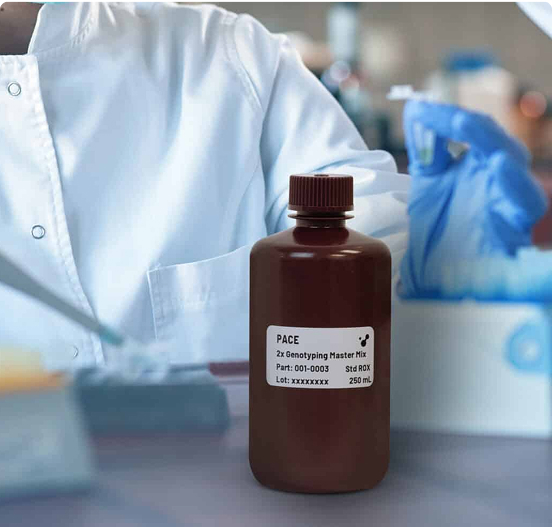
Most modern SNP genotyping assays rely on PCR-based amplification of specific genomic regions. Techniques such as allele-specific PCR, TaqMan assays, microarrays, and competitive allele-specific PCR methods like PACE® (PCR Allele Competitive Extension) detect variant-specific signals with high accuracy.
Because only selected loci are analyzed, genotyping is:
- Highly scalable for large populations
- Faster than full DNA sequencing
- Cost-efficient for screening known markers
- Reproducible across repeated experiments
This makes it particularly valuable in high-throughput environments.
What Is Genotyping Used For?
Genotyping is used to validate, monitor, or select for specific known genetic variants at scale. Understanding what genotyping is used for is key to deciding between DNA sequencing vs genotyping.
Genotyping is commonly applied when researchers need to validate, monitor, or select for specific known variants, including:
1. Agriculture & Breeding
- Marker-assisted selection (MAS)
- Trait validation in plant and animal breeding
- Genomic selection (GS)
- Hybrid verification and seed purity testing
2. Biomedical & Clinical Research
- Disease-associated variant screening
- Pharmacogenomics studies
- Population genetics analysis
- Monitoring transmission patterns of genetic risk factors
3. Research & Quality Control
- Strain identification
- Sample authentication
- Genetic background confirmation
Because genotyping focuses on predefined variants, it is the preferred method when the objective is screening or validation rather than discovery. If novel mutations must be identified, sequencing becomes the more appropriate approach.
What Is Sequencing?
DNA sequencing is the process of determining the exact order of the four nucleotides, adenine (A), thymine (T), cytosine (C), and guanine (G), in a DNA molecule. By reading the precise nucleotide sequence of a gene, targeted region, or entire genome, sequencing reveals the complete genetic information of a sample.
In the context of genotyping vs sequencing, DNA sequencing provides a comprehensive view of genetic variation, while genotyping focuses only on detecting predefined variants. This broader scope makes sequencing essential when mutation discovery or full genomic characterization is required.
How Does DNA Sequencing Work?
DNA sequencing involves several key steps:
- DNA Extraction: Genetic material is isolated from the sample.
- Library Preparation: DNA is fragmented and adapters are added for amplification and detection.
- Amplification & Sequencing Reaction: Platforms such as next-generation sequencing (NGS) read millions to billions of DNA fragments in parallel.
- Data Analysis: Bioinformatic tools assemble and interpret the sequence data to identify variants, mutations, or structural changes.
Modern sequencing technologies enable whole-genome sequencing (WGS), whole-exome sequencing (WES), and targeted panel sequencing. Short-read platforms (Illumina) deliver high accuracy at low cost per base, while long-read platforms (Oxford Nanopore, PacBio) resolve structural variants and repetitive regions that short reads cannot. Compared to genotyping, sequencing requires more computational analysis but delivers higher resolution and discovery potential.
What Is DNA Sequencing Used For?
DNA sequencing is used to discover novel variants, characterize whole genomes, and study genetic mechanisms in detail. Understanding what DNA sequencing is used for helps clarify the difference in the DNA sequencing vs genotyping decision.
Sequencing is widely applied in:
Biomedical Research
- Identifying disease-causing mutations
- Cancer genomics and tumor profiling
- Rare disease diagnostics
Clinical & Personalized Medicine
- Pharmacogenomics
- Precision oncology
- Inherited disorder screening
Agriculture & Environmental Science
- Trait discovery in breeding programs
- Pathogen identification
- Microbial and metagenomic studies
Because sequencing uncovers both known and novel variants, it is the preferred method when researchers need comprehensive genetic insight rather than targeted variant detection.
What Is Genotyping by Sequencing (GBS)?
Genotyping by sequencing (GBS) is a reduced-representation sequencing method that simultaneously discovers and genotypes thousands of SNPs across many samples. Unlike traditional PCR genotyping, which targets predefined loci, GBS combines restriction enzyme digestion with next-generation sequencing (NGS) to simultaneously discover and genotype thousands of SNPs across many samples.
In the broader genotyping vs sequencing comparison, GBS represents a hybrid approach. It uses DNA sequencing technology but focuses on a subset of the genome rather than delivering full whole-genome coverage. This allows researchers to balance variant discovery with scalability.
GBS is especially useful for:
- SNP discovery
- De novo genome assembly
- High-density genetic mapping
- Population genomics
- Research involving non-model organisms
Although more comprehensive, sequencing requires greater computational resources, higher costs, and longer turnaround times. It is often used in early-stage research or when genome-wide insights are needed.
How Does Genotyping by Sequencing Work?
GBS typically involves:
- Restriction enzyme digestion to reduce genome complexity
- Adapter ligation and barcode tagging for multiplexing samples
- Next-generation sequencing (NGS) of selected fragments
- Bioinformatic analysis to identify SNPs and genotype samples
Genotyping vs Sequencing: Key Differences at a Glance
While genotyping and sequencing are both essential tools in modern genomics, they differ in scope, detail, and application. Understanding these differences helps researchers select the most efficient and cost-effective method for their study.
| Feature | PCR Genotyping | Genotyping by Sequencing |
| Purpose | Screen known SNPs/Indels | Discover and profile genome-wide variants |
| Cost | Low (especially per data point) | High (especially for high-depth coverage) |
| Speed | Fast (simple analysis pipeline) | Slower (complex bioinformatics) |
| Data Volume | Targeted, focused output | High volume, requiring storage/analysis |
| Throughput | High (thousands of samples/day) | Moderate (fewer samples, more depth) |
| Best for | Marker-assisted selection, validation, routine screening | Discovery research, rare disease, whole-genome studies |
When to Choose Genotyping vs Sequencing
Choose genotyping when:
- Variants of interest are already known
- Large populations need to be screened efficiently
- Cost and speed are priorities
- Routine validation or breeding selection is required
Choose DNA sequencing when:
- Novel mutations must be identified
- Structural or rare variants are important
- Comprehensive genomic analysis is required
- Discovery-driven research is the goal
Advantages of PCR Genotyping
- Efficiency PCR-based systems like PACE allow for extremely fast processing of large sample sets. With platforms like the 3CR GeneArrayer, researchers can process thousands of reactions per day.
- Cost-Effectiveness When working with a known set of markers (e.g. 1–100 SNPs), PCR genotyping dramatically lowers per-sample and per-marker costs compared to sequencing.
- Simplicity PCR genotyping does not require extensive data analysis. A simple fluorescence readout indicates genotype, making the process ideal for labs without dedicated bioinformatics support.
- Flexibility Custom primers can be developed from SNP-containing sequences without needing a full reference genome. PACE chemistry works well even in non-model species.
- High Sensitivity and Specificity Allele-specific PCR is well-suited to validate marker-trait associations with minimal false positives, which is critical in breeding programs.
Advantages of Genotyping by Sequencing
- Genome-Wide Discovery
GBS methods allow detection of novel variants, including rare SNPs, structural variants, and insertions/deletions. - High Marker Density
Sequencing provides access to thousands or millions of markers, ideal for fine mapping or detailed population structure analysis. - Broad Applications
Sequencing is useful for evolutionary studies, de novo genome assembly, and any situation where prior marker knowledge is lacking. - Future-Proofing
Once sequencing data is generated, it can be reused or reanalyzed in the future for different research questions.
When to Choose Genotyping Over Sequencing
Genotyping is the preferred approach when speed, cost-efficiency, and targeted variant detection are key. PCR-based genotyping delivers reliable results without the depth or expense of full sequencing. It is ideal when:
- The variants are already known, and the goal is to confirm their presence or absence.
- Cost per data point is important, and large-scale screening must remain affordable.
- High-throughput testing is required, such as analyzing many samples in a short time.
- Real-time decision-making is critical, for example in breeding programs or diagnostics.
- Sample input is limited or low quality, including crude materials like leaf punches or animal hair.
Case Study: Peanut Breeding at NC State University
At North Carolina State University’s Peanut Breeding & Genetics Program, researchers used PCR genotyping with PACE to streamline cultivar development. By targeting SNPs linked to key traits, they reduced genotyping time and cost, accelerating trait selection and variety release. Read more about their development pipeline here.
When to Choose Sequencing Over Genotyping
Use genotyping-by-sequencing when:
- You’re working with non-model species with unknown markers
- You need to build genetic maps or conduct association studies
- You need to detect a broad spectrum of genomic variation
- You’re conducting basic or exploratory research
Integration of Both Approaches
The most efficient research strategies often combine sequencing for discovery with PCR genotyping for validation and large-scale screening. This complementary use plays to the strengths of each method:
- Use GBS to discover markers and identify candidate SNPs
- Then use PCR genotyping (e.g. PACE) to validate and screen those markers in large populations
This pipeline supports robust, cost-effective breeding strategies where sequencing sets the stage and PCR delivers the practical results.
Scalable PCR Genotyping for Every Lab
3CR Bioscience’s PACE® technology offers researchers a fast, accurate, and scalable way to perform SNP genotyping at any throughput. The chemistry is designed for flexibility across crops, species, and sample types:
- Compatible with crude DNA and RNA inputs
- Multiplexing up to 4 targets per reaction
- Supports real-time or endpoint detection
- Interoperable with KASP™ and Amplifluor systems
PACE 2.0 provides enhanced signal clarity and tight clustering, even from challenging DNA sources, PACE Multiplex allows multiple assays per reaction, while PACE OneStep RT-PCR enables direct RNA-to-genotype workflows.
Automating Genotyping with 3CR’s GeneArrayer Platform
To further improve throughput and reproducibility, 3CR offers a full suite of automation tools:
- GeneExtract: Fast, high-yield DNA extraction
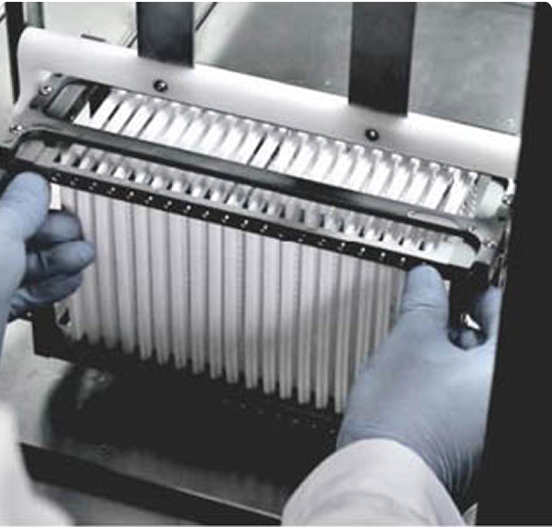
- GeneArrayer: Automated PCR plate setup for high throughput
- GeneCycler: Optimised thermal cycling
- GeneScanner: High-resolution fluorescence detection
These tools work together to reduce hands-on time, standardise results, and cut costs for genotyping at scale.
Final Thoughts
Choosing between genotyping and sequencing depends on your goals, sample size, and budget. For focused, high-throughput screening of known variants, PCR genotyping remains the most efficient choice. For discovery-driven or genome-wide research, sequencing is unmatched in depth and detail.
At 3CR Bioscience, we help researchers build cost-effective, fit-for-purpose genotyping strategies with robust assay design, validated chemistry, and streamlined instrumentation.
Need help deciding between PCR genotyping and sequencing for your project? Contact us at support@3crbio.com — we’re here to help you choose the right tool for the job.
Frequently Asked Questions
What is the main difference between genotyping and sequencing?
Genotyping detects known genetic variants at predefined positions, while sequencing reads the exact nucleotide order of a DNA region or entire genome to reveal both known and novel variants. Genotyping is faster and cheaper at scale; sequencing delivers more comprehensive information.
Is genotyping cheaper than sequencing?
Yes. PCR-based genotyping typically costs cents per data point and scales linearly with sample number, while whole-genome or whole-exome sequencing usually costs tens to hundreds of dollars per sample plus bioinformatics overhead. The cost advantage grows as sample numbers increase.
When should I use PCR genotyping instead of sequencing?
Use PCR genotyping when the variants of interest are already known, when large populations need to be screened, when turnaround time and cost matter, or when sample input is limited or low quality. Marker-assisted selection in plant breeding is a typical example.
What is genotyping by sequencing (GBS) used for?
GBS is used for SNP discovery, de novo genetic map construction, population genomics, and research in non-model species without a reference genome. It captures a representative subset of the genome through restriction enzyme digestion combined with next-generation sequencing.
Does whole genome sequencing replace genotyping?
Not for most production-scale workflows. Even as sequencing costs fall, PCR genotyping remains faster, cheaper per data point, and simpler to analyze for known-marker screening. Many programs use sequencing to discover markers and PCR genotyping to deploy them at scale.
What is the best method for marker-assisted selection?
PCR-based SNP genotyping with chemistries like PACE® is the standard for marker-assisted selection. It delivers high accuracy on known markers, tolerates crude DNA inputs, scales to thousands of samples per day, and integrates cleanly with existing breeding workflows.
Case Study: Peanut Breeding at NC State University
At North Carolina State University’s Peanut Breeding & Genetics Program, researchers used PCR genotyping with PACE to streamline cultivar development. By targeting SNPs linked to key traits, they reduced genotyping time and cost, accelerating trait selection and variety release. Read more about their development pipeline in our case study.