A recent study published in BMC Plant Biology demonstrates how high-throughput SNP genotyping can accelerate the identification of disease resistance traits in crops. The research, titled “Exploring the genomic landscape of gummy stem blight resistance in watermelon through QTL-Seq,” combines genomic analysis with PACE® genotyping assays to validate markers linked to disease resistance.
For plant breeders and agricultural genomics researchers, the work highlights how targeted genotyping technologies can rapidly translate sequencing discoveries into practical breeding tools.
Tackling gummy stem blight in watermelon
Gummy stem blight is a significant fungal disease affecting watermelon production worldwide. It can cause severe yield losses, making the development of resistant cultivars a priority for breeding programs.
In the study, researchers used QTL-seq analysis to identify genomic regions associated with resistance to the disease. This approach combines bulked segregant analysis with next-generation sequencing to pinpoint candidate SNPs linked to a trait of interest.

However, identifying SNPs is only the first step. To move discoveries into breeding pipelines, those markers must be validated and converted into accurate and reliable genotyping assays that can screen large numbers of plants.
This is where PACE® genotyping was applied.
Using PACE® assays to validate resistance markers
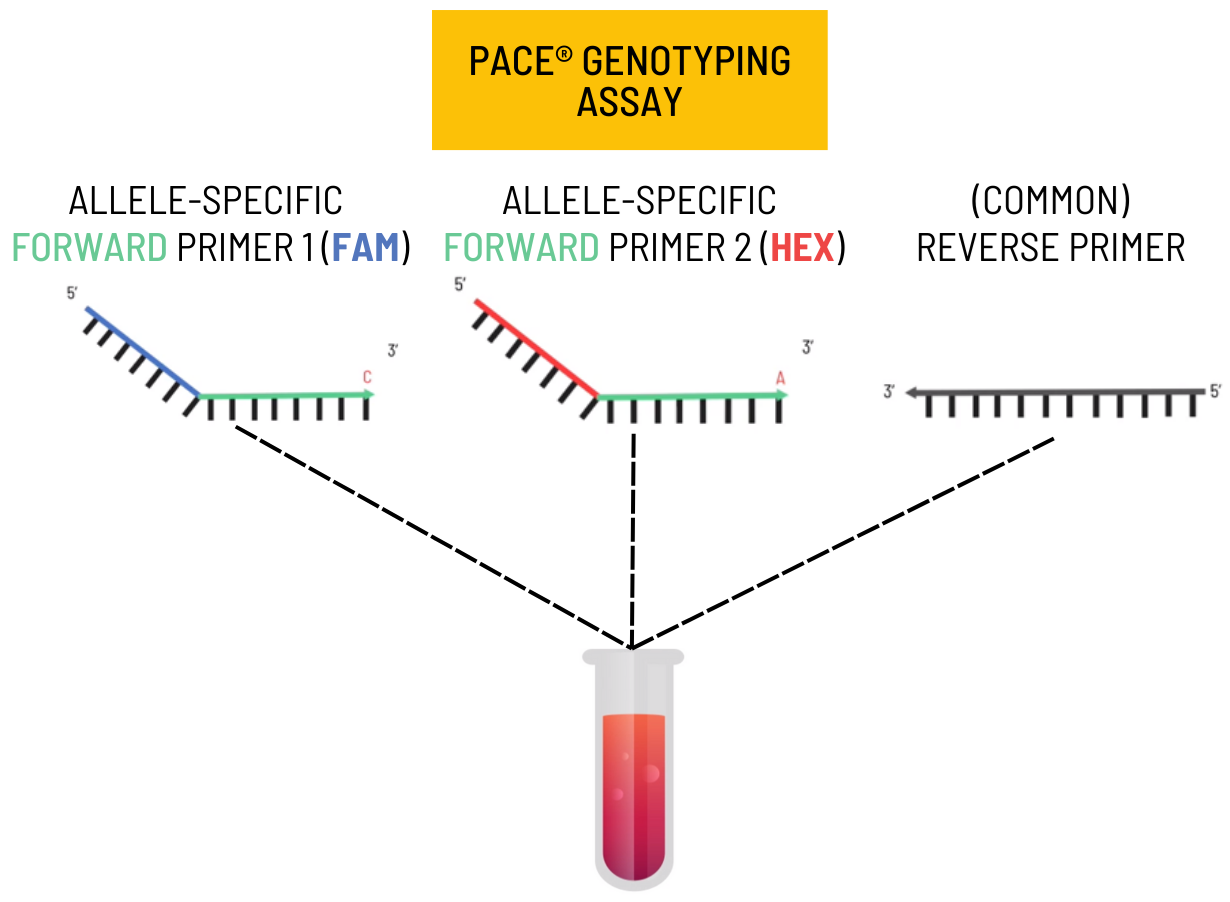
The research team designed 24 PACE assays based on SNPs identified during the QTL-seq analysis. Each assay used two allele-specific primers and a common reverse primer to discriminate between resistant and susceptible alleles.
Following testing, 11 assays produced informative genotyping results, successfully distinguishing between:
- Heterozygous plants
- Homozygous resistant individuals
- Homozygous susceptible individuals
Among these markers, eight assays showed particularly strong discriminatory power, clearly separating resistant and susceptible genotypes. Statistical analysis confirmed that genotype groups identified by the PACE assays were significantly associated with disease severity (p < 0.001), demonstrating their value for marker-assisted selection.
In practical terms, this means breeders now have validated molecular markers that can help identify resistant plants earlier in the breeding process.
Why PACE® works for marker validation
PACE® (PCR Allelic Competitive Extension) is a fluorescent, allele-specific PCR genotyping technology designed for high-throughput SNP and indel detection. It uses two competing allele-specific primers and a common reverse primer, with fluorescence signals indicating the genotype at each locus
Because the assays rely only on unlabelled primers rather than expensive probes, the technology provides a simple and cost-effective solution for screening large populations in crop breeding projects.
This makes PACE® particularly well suited for:
- Marker validation following sequencing or QTL studies
- High-throughput screening of breeding populations
- Trait-linked SNP analysis in agriculture and horticulture
From genomic discovery to breeding impact
The watermelon study illustrates a common workflow in modern crop genetics:
- Discovery – sequencing identifies candidate SNPs associated with a trait
- Validation – genotyping assays confirm which markers reliably predict the phenotype
- Application – breeders use validated markers for marker-assisted selection
PACE® technology plays a critical role in the validation and application stages, allowing researchers to move quickly from genomic discovery to real-world breeding decisions.
Making science affordable
At 3CR Bioscience, our mission is “Making science affordable.”
Studies like this highlight how accessible genotyping tools enable researchers and breeders to turn genomic insights into practical improvements in crop resilience. By providing robust, scalable SNP genotyping, PACE® helps scientists accelerate trait discovery, validate markers, and ultimately support the development of more resilient crop varieties.
As plant breeding continues to integrate genomics at scale, technologies that bridge the gap between sequencing data and high-throughput genotyping will remain essential.