Polymerase Chain Reaction (PCR) is a fundamental technique in molecular biology, powering rapid DNA amplification for research, agriculture, medicine, and biotechnology. As PCR automation advances, manual processes are giving way to sophisticated automated PCR systems that transform genotyping workflows. Today’s PCR automation systems handle sample preparation, replication, plate dispensing, thermal cycling, and data analysis—streamlining every step with increased speed, accuracy, and consistency. By reducing manual errors and maximizing throughput, automated PCR setup solutions are now essential for high-throughput applications, offering both modular and specialized options tailored to diverse laboratory needs. A core component of these systems is automated pipetting, which eliminates manual pipetting errors and ensures consistent, precise PCR setup at scale.
What is PCR Automation?
PCR automation refers to the use of advanced automated systems and technologies to perform the Polymerase Chain Reaction (PCR) process with minimal manual intervention. By automating tasks such as sample preparation, thermal cycling, and data analysis, PCR automation systems improve efficiency, accuracy, and consistency in laboratories. These automated PCR solutions are essential for high-throughput applications, enabling researchers to process large volumes of samples quickly while reducing human error and optimizing resource use. Automation is especially transformative in high-throughput PCR genotyping, enabling rapid reaction setup, consistent allele detection, and scalable SNP analysis.

Key features and benefits of automated PCR systems:
- Automated Sample Handling: Instruments can perform tasks like DNA extraction, liquid handling, reaction preparation, and plate loading, minimizing manual steps and reducing the risk of errors and cross-contamination.
- Automated PCR Setup: These systems can automatically dispense reagents and set up PCR reactions, ensuring consistent and reproducible results.
- PCR Detection and Analysis: Enables the detection and quantification of target DNA either in real time or at the PCR endpoint.
- Data Analysis and Integration: Automation software can analyze PCR results, track samples, and integrate with Laboratory Information Management Systems (LIMS).
- Increased Throughput and Efficiency: Automation significantly increases the number of samples that can be processed in a given time, improving lab productivity.
- Reduced Error and Improved Reproducibility: Automation minimizes human error and ensures consistent experimental conditions, leading to more reliable results.
- Modular and Customizable: Systems are often modular, allowing for customization and integration with other lab equipment, and scaling to meet growing workflow needs.
Traditional vs. Automated PCR Workflows
In traditional PCR workflows, researchers manually prepare samples, pipette reagents, and set up reactions. This process is labour-intensive and susceptible to human error. In contrast, automated PCR workflows use advanced instrumentation to perform these tasks with consistent accuracy and speed.
| Aspect | Traditional Workflow | Automated Workflow |
| Setup Time | High | Minimal |
| Reproducibility | Variable (user-dependent) | Consistent |
| Error Rate | Moderate to High | Low |
| Throughput | Limited | Scalable |
Understanding PCR Instrumentation
Automated Liquid Handling Systems
Manual PCR setup is time-consuming and prone to errors. Automated pipetting eliminates this bottleneck by standardising reagent delivery and reaction setup. Automated sample preparation systems, such as the GeneArrayer and GeneArrayer Pro from 3CR Bio, transform this process. These systems handle liquid dispensing, sample mixing, replication, dispensing, and sealing with minimal user intervention—supporting assay miniaturisation by enabling accurate low-volume PCR setup while significantly reducing hands-on time and reagent use.
96-well plates are widely used for routine PCR and qPCR applications, providing sufficient well capacity for sample storage and moderate-throughput experiments while maintaining ease of manual handling. In contrast, 384-well plates significantly increase throughput, allowing researchers to conduct more reactions simultaneously without increasing reagent volume per reaction. This is ideal for high-throughput PCR genotyping, where researchers must process large sample sets with minimal reagent use and maximum consistency. The smaller well volume in 384-well plates supports assay miniaturisation by reducing reagent costs and enhancing signal uniformity, improving overall reaction efficiency.
Thermal Cyclers
Thermal cyclers are the backbone of PCR instrumentation. These devices automate the cycling of temperatures necessary for target DNA amplification, cycling through the successive denaturation, annealing, and extension steps. Modern thermal cyclers can process multiple 384-well plates per run, dramatically improving throughput while reducing energy consumption compared to traditional Peltier-based instruments.
High Throughput PCR Automation for SNP Genotyping with PACE®
Our exciting genotyping instrumentation range is expanding access to high-throughput genomics across agriculture and life sciences. Paired with our patented PACE® genotyping reagents, these state-of-the-art tools enhance SNP genotyping throughput, efficiency, and precision while offering unmatched performance, efficiency, and value in labs worldwide.
Unlock the Full Potential of SNP Genotyping with Our Comprehensive Instrumentation
Our new range of instruments is tailored for laboratories of all sizes and throughput requirements, ensuring that every lab can benefit from the latest in genotyping automation. Whether you’re working with low, medium, high, or ultra-high throughput workflows, our end-to-end solutions offer the flexibility and scalability to meet your specific needs.
Automation at a Glance
- HC9600 and HC384: Automated nucleic acid extraction systems for high-quality nucleic acid purification in minutes.
- GeneArrayer and GeneArrayer Pro: Transform your lab with comprehensive liquid handling capabilities and optimised lab workflows.
- GeneCycler: High-throughput water bath thermal cycling for maximum efficiency, performance and sustainability.
- GeneScanner: High-speed fluorescence scanner for accurate signal detection and data analysis.
- GeneMaster Software: Comprehensive software for data management, cluster plot generation, and data export.
Instrumentation Overview:
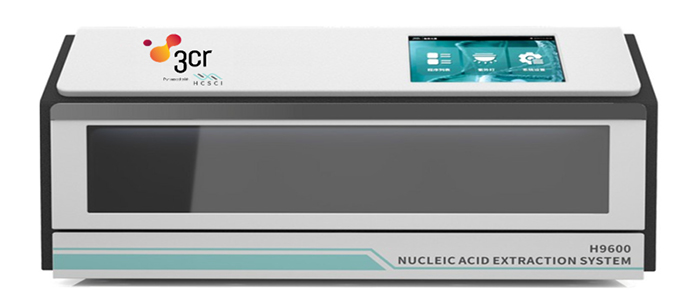
HC9600 and HC384
Meet the H384 and H9600, your all-in-one nucleic acid extraction solutions. These advanced instruments are compatible with magnetic bead-based reagent kits and process up to 384 samples in 25–30 minutes from a range of starting material. With pre-loaded programs, touch-screen operation, and contamination control, they deliver high-quality extractions for SNP genotyping, library sequencing, gene chip analysis, and more. Streamline your workflow with precise, user-friendly automation.
GeneArrayer and GeneArrayer Pro
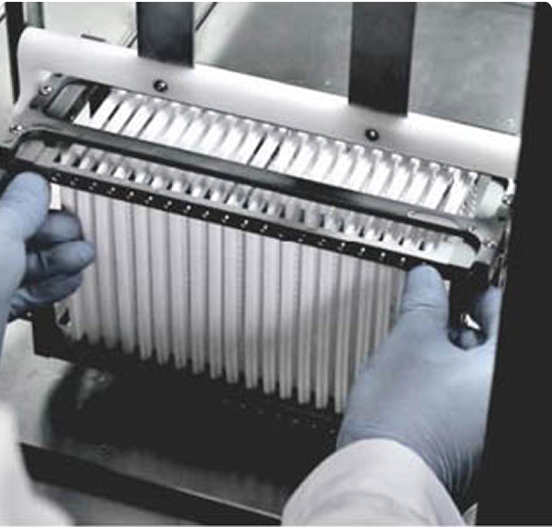
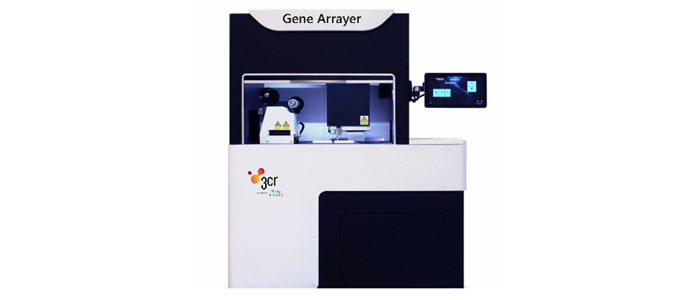
The GeneArrayer automates sample replication, assay dispensing, pipette washing, and plate sealing in one workstation. With precise nanolitre dispensing, it minimizes reagent and plastic use while ensuring high levels of accuracy. Featuring a 96-tip head, barcode scanner, and rapid 384-well plate dispensing, the GeneArrayer streamlines liquid handling and dispensing workflows. Upgrade to the GeneArrayer Pro for ultra-high-throughput automation, an automated stacker system that holds up to 80 plates including sample and destination plates and has a fully automated ‘set and forget’ solution for walkaway plate processing.

GeneCycler
A high-efficiency water bath thermal cycling instrument. Up to 20 low profile 384-well PCR plates or 16 standard 384-well or 1536-well PCR plates can be cycled each run. The GeneCycler’s integrated touchscreen control panel provides a user-friendly interface to easily create protocols and monitor progress during each run. With an improved heating design, the GeneCycler increases throughput while reducing running costs, using up to 80% less energy than standard Peltier PCR blocks. Featuring 3 individually temperature-controlled water baths, high-efficiency heating, and a robust basket design, the GeneCycler streamlines and enhances your thermal cycling process.

GeneScanner
The GeneScanner is a high-throughput fluorescence scanner for rapid, sensitive signal detection. It features automated plate handling, barcode reading, and full-field scanning with read times as low as 5 seconds per filter. Detecting volumes as low as 1 µL, the GeneScanner supports multiple detection channels across the visible spectrum and a range of PCR plates, and is also PACE® Multiplex compatible. Boost efficiency with fast, precise fluorescence analysis.

GeneMaster Software
The GeneMaster software supports flexible layout settings, powerful data management and data analysis capabilities. It enables users to quickly access raw data for analysis and easy export of experimental results to Excel. Raw data is converted into precise cluster plots and data can be exported in various formats, allowing for convenient examination of data attributes. It supports exporting CSV data, cluster plot images, SNP viewer and structural data. Autoscoring function with the added backup of optional manual QC approval of all data plots. Users can overlay data from several cluster plots when analyzing the results, reducing time by not having to analyze one plate of data at a time.
Scalable Workflows for any Laboratory
These modular genotyping solutions are designed to fit seamlessly into your laboratory, regardless of your throughput needs. Here’s how our instruments can streamline your workflow:
Low Throughput Example Workflow:
Entry level genotyping lab workflow with manual dispensing into PCR plates run on standard Peltier thermal cycling instruments.
- Manual liquid handling paired with Peltier thermal cycling
- High-speed fluorescence scanning using the GeneScanner
Medium Throughput Example Workflow:
A balanced solution offering moderate capacity and speed, perfect for mid-sized labs with growing demands.
- Single-plate automated extraction (HC9600)
- Manual liquid handling
- High-throughput thermal cycling with the GeneCycler
- High-speed fluorescence scanning with the GeneScanner.
High Throughput Example Workflow:
High-efficiency genotyping for larger labs, providing fast and reliable results with significant sample volumes.
- 4-plate automated extraction with the HC384
- Liquid handling with the GeneArrayer
- High-throughput thermal cycling with the GeneCycler
- High-throughput fluorescence scanning with the GeneScanner
Ultra-High Throughput Example Workflow:
Top-tier solution designed for extensive genotyping projects, ensuring maximum productivity and rapid data generation.
- 4-plate automated extraction with the HC384
- Complete liquid handling and dispensing automation the GeneArrayer Pro
- High-throughput thermal cycling with the GeneCycler
- High-throughput fluorescence scanning with the GeneScanner
Genotyping Automation Powered by PACE

Paired with our patented PACE® genotyping reagents, these state-of-the-art tools are enhancing SNP genotyping throughput, efficiency, and precision by providing unparalleled performance, efficiency and value in labs worldwide. Whether you’re processing hundreds or thousands of samples, our tools are designed to scale with your needs, ensuring reliable results every time.
What Is PACE Multiplex?
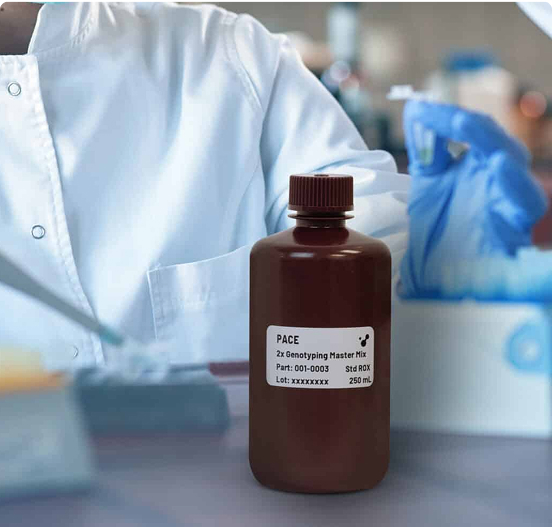
PACE Multiplex Master Mix has been developed to simplify and accelerate genotyping workflows, combining the power of PCR amplification with allele-specific PCR extension and four-color fluorescent labelling. It allows researchers to simultaneously detect four targets, such as: Tri- or Quad-allelic SNPs, or one reference gene and three genes of interest.

Key Features and Benefits
- Simultaneous Detection of Four Targets – Equipped with FAM, HEX, ATTO 590, andATTO 647N fluorescent reporters, the mix allows for multiplexing without compromising accuracy or reliability.
- Efficiency and Sustainability – 2x more data per reaction; 50% reduction in DNA usage, consumables, and plastic waste; significant time and cost savings.
- Compatibility with Most Equipment – the master mix is compatible with nearly all qPCR machines capable of detecting the specified fluorophores, also allowing realtime monitoring. Its inclusion of ATTO 680 as a reference dye ensures robust signal normalization for consistent results.
- Customizable Assay Design – Users can leverage 3CR Bioscience’s free PACE assay design service and choose full or partial assay validation for tailored, high-quality solutions.
Conclusion
PCR instrumentation has come a long way from manual setups to sophisticated automated systems. By choosing solutions like genotyping automation from 3CR, laboratories can optimize their workflows, reduce errors, and enhance scalability. Make the switch to automated PCR today and achieve more and better outcomes.