Genotyping PCR is a powerful technique used to detect and analyze genetic variations with high accuracy and speed. In this article, you’ll learn what genotyping PCR is, how it works step by step, why it is used in genetic research and diagnostics, and what advantages it offers for reliable results. By the end of this guide, you’ll have a clear understanding of when and how to use genotyping PCR effectively in both research and clinical applications.
Introduction: What is PCR Genotyping?
PCR genotyping – also known as genotyping by PCR – is a powerful molecular technique used to identify genetic variation within DNA sequences. The method relies on well-defined PCR steps–denaturation, annealing, and extension–to selectively amplify target regions and enable accurate detection of SNPs and Indels. Leveraging the high specificity of polymerase chain reaction (PCR), researchers and breeders can accurately detect single nucleotide polymorphisms (SNPs) and insertions or deletions (Indels) with high accuracy. This technique offers a cost-effective, high-throughput, and scalable solution for SNP validation, marker-assisted selection (MAS), and genomic selection (GS) in both plant and animal breeding programs.
Why PCR Genotyping Is Used in Practice
PCR genotyping is commonly selected when fast, reliable answers are needed for predefined genetic questions. Instead of generating large amounts of sequencing data, it allows researchers to focus on specific genetic variants that are already known to be relevant, reducing both turnaround time and data complexity.
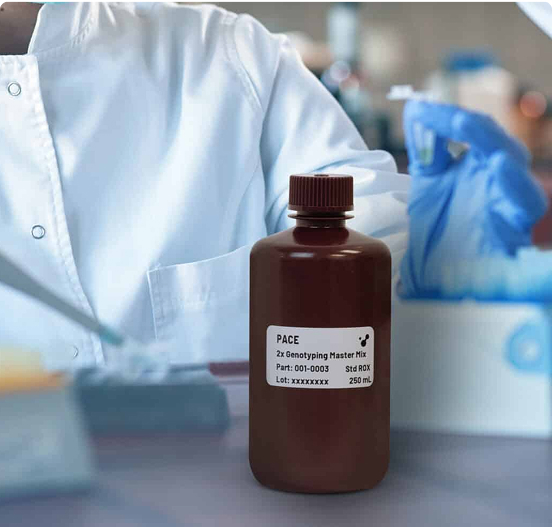
Allele-specific PCR approaches, including 3CR Bioscience’s proprietary PACE® chemistry, are particularly effective in workflows that require high sensitivity and consistency across many samples. These methods are designed to scale efficiently, making them well suited for routine genotyping tasks in research and breeding programs.
As von Maydell (2023) describes, PACE® technology is especially advantageous when analyzing a small set of SNPs across large populations. This makes it a strong choice for applications such as sex determination, genetic mapping, and cross-validation, where rapid throughput and dependable results are essential.
What Is Genotyping Used For?
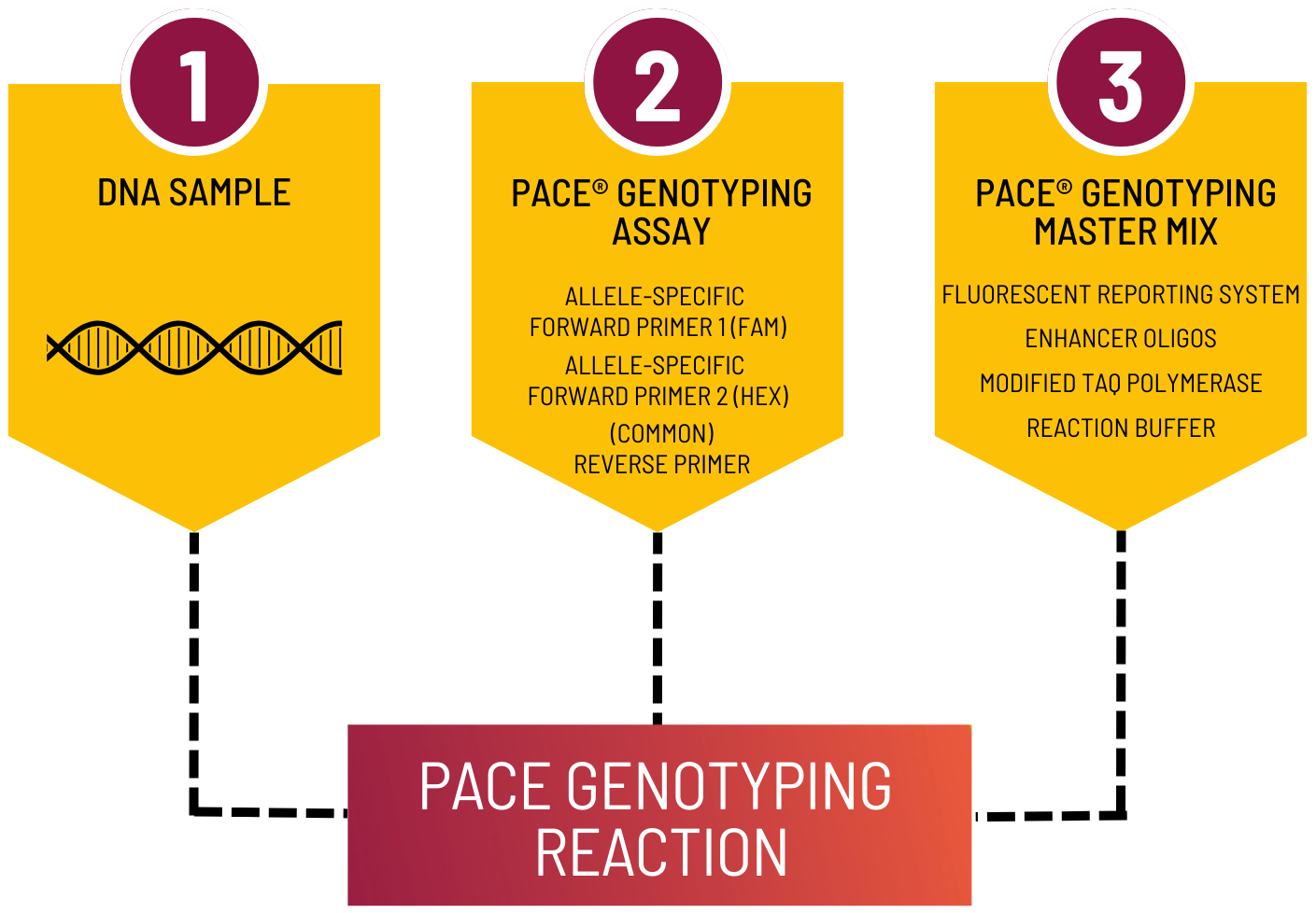
Genotyping is used to identify specific genetic variations that influence traits, performance, or biological outcomes. By analyzing known genetic markers, researchers can make informed decisions without sequencing entire genomes, saving time and resources.
In practice, genotyping is commonly used to support trait selection, genetic validation, and population analysis. In agriculture and livestock breeding, it helps identify markers linked to yield, disease resistance, fertility, or growth, enabling faster and more precise selection decisions. In research settings, genotyping supports genetic mapping, cross-validation of markers, and confirmation of experimental results.
Genotyping is also used to translate genetic data into actionable insights. By focusing on predefined variants, it allows large sample sets to be analyzed efficiently, making it a practical tool for high-throughput studies where consistency and scalability are essential.
PCR Genotyping vs. Sequencing Methods
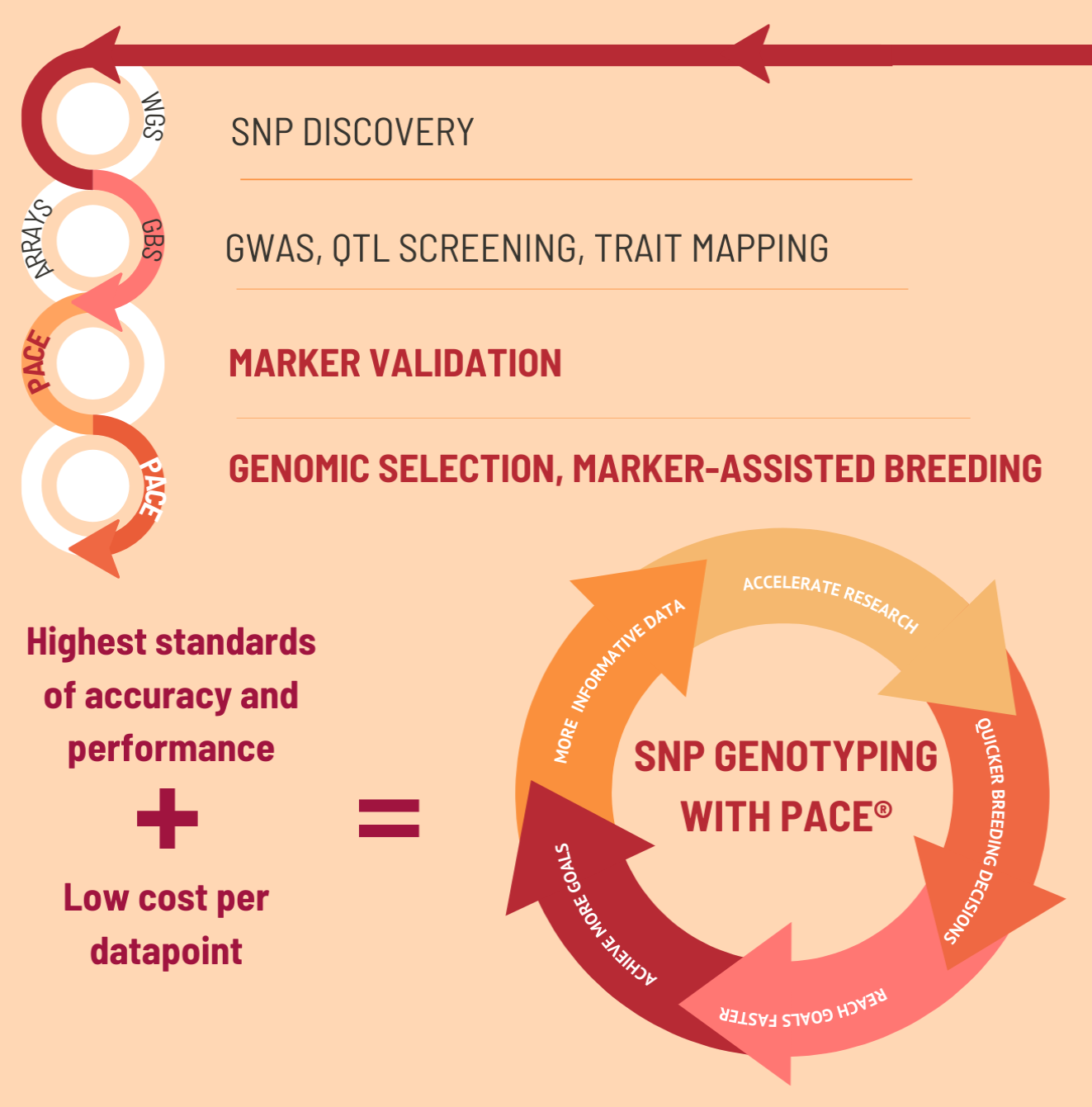
While next-generation sequencing (NGS) and genotyping-by-sequencing (GBS) are ideal for SNP discovery, PCR genotyping offers distinct advantages for routine marker validation and screening:
- Cost: PCR genotyping is significantly more affordable for moderate-scale projects (1-100 markers).
- Speed: Faster turnaround due to simplified analysis and minimal data processing.
- Data Volume: Sequencing generates large, often redundant datasets; PCR genotyping focuses on known, relevant SNPs.
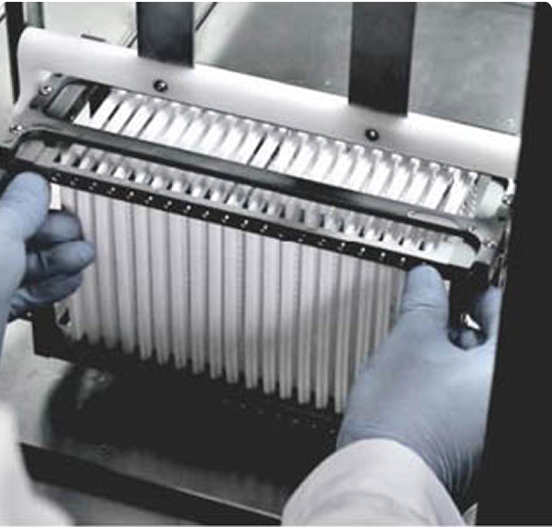
- Scalability: PCR genotyping platforms like 3CR’s GeneArrayer efficiently processes hundreds to thousands of samples.
Applications of PCR Genotyping in Breeding Programs
PCR genotyping is widely used in agricultural and livestock breeding programs to support data-driven selection decisions. In particular, PCR-based SNP genotyping approaches such as PACE® enable fast and reliable analysis of genetic markers across large populations.
Key applications include:
- Marker Validation: Essential following SNP discovery via GBS or GWAS, confirming that markers are linked to traits of interest.
- Marker-Assisted Selection (MAS): Rapid screening for desirable traits, such as disease resistance, yield, or fertility.
- Genomic Selection (GS): Feeding validated SNPs into prediction models to estimate breeding values and drive genetic gain.
By focusing on known, trait-linked markers, PCR genotyping supports efficient selection strategies while keeping costs and turnaround times low.
Advantages of PCR Genotyping with Allele-Specific PCR
Allele-specific PCR offers several advantages that make it particularly well suited for targeted genotyping applications.
- High Precision and Specificity: Allele-specific PCR ensures accurate discrimination between alleles, which is critical for accurate trait association and selection decisions.
- Targeted Flexibility: Custom primer design enables researchers to target specific loci relevant to breeding objectives.
- High-Throughput Capability: Large numbers of samples can be processed efficiently without sacrificing data quality or reproducibility.
- Cost-Effective Implementation: For studies focused on a defined set of SNPs, PCR genotyping provides a practical alternative to sequencing-based approaches, which may be unnecessary or impractical.
Together, these advantages make allele-specific PCR a reliable and scalable solution for routine genotyping in breeding and applied genetics workflows.
Flexibility and Customization
Allele-specific PCR offers exceptional flexibility. Researchers can design primers targeting SNP loci associated with key breeding objectives, streamlining selection and improving outcomes. Its scalability supports diverse breeding projects—from targeted trials to population-wide screens.
As highlighted by von Maydell, primer design is a foundational step. A list of SNP-containing sequences can be submitted for rapid assay development. No reference genome is required, making PACE accessible for non-model organisms with limited genetic data.
Validation of Marker-Trait Associations
Accurate validation of SNP-trait links ensures the reliability of MAS strategies. Allele-specific PCR allows researchers to test associations across varied genotypes and environments. Including homozygous, heterozygous, and control samples, strengthens confidence in marker efficacy.
Integration with Genomic Selection
Validated SNP markers are key inputs in genomic prediction models. PCR genotyping provides the genotypic data needed to estimate breeding values, allowing earlier and more accurate selection. This synergy accelerates genetic improvement and enhances breeding efficiency.
SNP genotyping with allele-specific PCR is the preferred method for validating genetic markers in breeding programmes, offering unmatched sensitivity, specificity, and customisation options. By leveraging this method, researchers and breeders can efficiently validate marker-trait associations, enhance genomic selection strategies, and expedite progress toward breeding objectives. In a field where efficiency and precision are crucial, adopting SNP genotyping with allele-specific PCR is a strategic investment in the future of agricultural and livestock breeding and genetic improvement.
Why Choose PACE® for PCR Genotyping?
PACE (PCR Allele Competitive Extension) from 3CR Bioscience represents a leap forward in PCR genotyping chemistry.
- Compatible with crude DNA samples
- Multiplexing capabilities
- Real-time signal observation
- One-step genotyping directly from RNA
- Interoperability with KASP™ and Amplifluor assays
PACE 2.0 offers enhanced signal clarity and tighter clustering especially with tricky or crude DNA samples, while PACE OneStep RT PCR enables simultaneous reverse transcription and genotyping in a single tube.

3CR Bioscience’s Genotyping Solutions:
- PACE Genotyping Master Mix: Universal mix with precise fluorescent signals across any reaction volume.
- PACE 2.0 Genotyping Master Mix: Improved signal-to-noise ratio and real-time reaction monitoring.
- PACE OneStep RT PCR Master Mix: Combines reverse transcription and PCR in one reaction for RNA-based genotyping.
- ProbeSure Master Mix: A cost-effective, robust hydrolysis probe mix for TaqMan™-style assays.
- Free assay design service: Rapid SNP/Indel marker development, with optional validation by our expert team.
Automating PCR Genotyping: 3CR’s GeneArrayer Platform
Automation significantly enhances PCR genotyping:
- Throughput & Speed: Thousands of samples processed daily with minimal hands-on time.
- Consistency: Standardized pipetting and thermal cycling enhance reproducibility.
- Scalability: Easily adaptable from small-scale validation to extensive population studies.
- Cost Efficiency: Reduced labour, waste, and reruns lower the per-sample cost.
3CR’s integrated platforms —GeneExtract, GeneArrayer, GeneCycler, and GeneScanner—enable seamless DNA processing from extraction to data analysis.
Case Studies: PACE in Action
Real-world applications of PACE PCR genotyping underscores its impact:
- Lamb Mortality Studies in Dairy Sheep: Early identification of genetic markers associated with survival rates.
- Boosting peanut cultivar development with PCR genotyping: Unlocking the full potential of peanuts with SNP genotyping and an allele-specific PCR workflow at Peanut Breeding & Genetics Program, Crop & Soil Sciences at, North Carolina State University
- Hop Breeding Sex Markers: PACE PCR genotyping boost hop breeding with an affordable and convenient diagnostic marker to identify male and female hop plants.
Conclusion: The Future of Genetic Analysis Lies in PCR Genotyping
PCR genotyping, particularly with PACE genotyping chemistry, bridges the gap between SNP discovery and trait selection, offering speed, affordability, and precision for life science researchers, biotech pioneers, agricultural researchers, and breeders alike. As von Maydell (2023) emphasises, systems like PACE are ideal for reanalyzing validated SNPs across multiple genotypes—providing unmatched efficiency for genetic improvement.