Blog

Solving Common Plant and Seed DNA Extraction Challenges with User Friendly Kits and Scalable Automation

Solving Common Plant and Seed DNA Extraction Challenges with User Friendly Kits and Scalable Automation

In plant and seed genomics, DNA extraction is not always straightforward or as streamlined as it could be.

Variability in yield, purity, and downstream performance can quickly become amplified—especially when workflows scale up. What might be a minor inconsistency at low throughput can turn into a significant bottleneck when processing hundreds or thousands of samples.

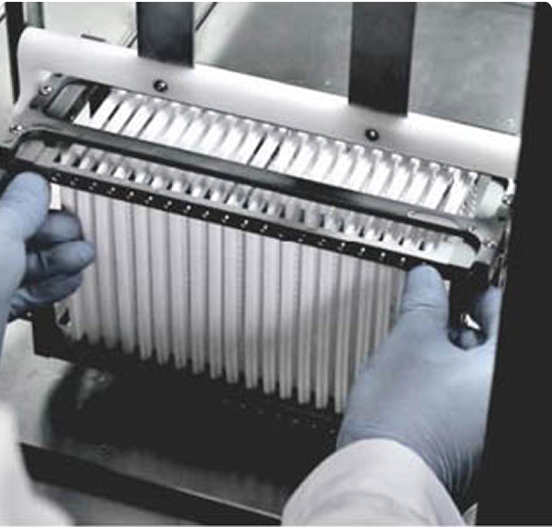
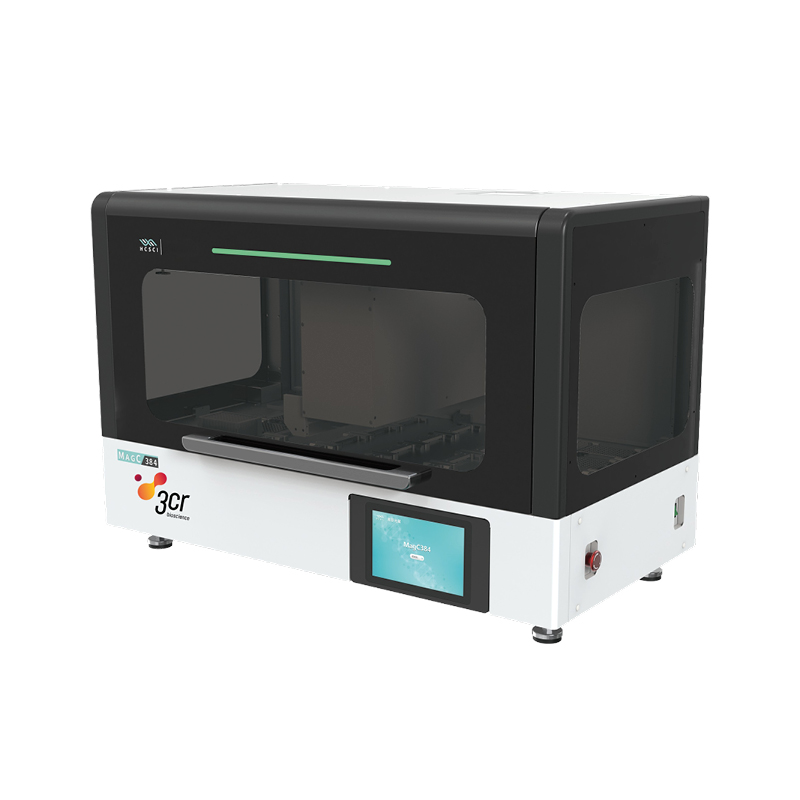
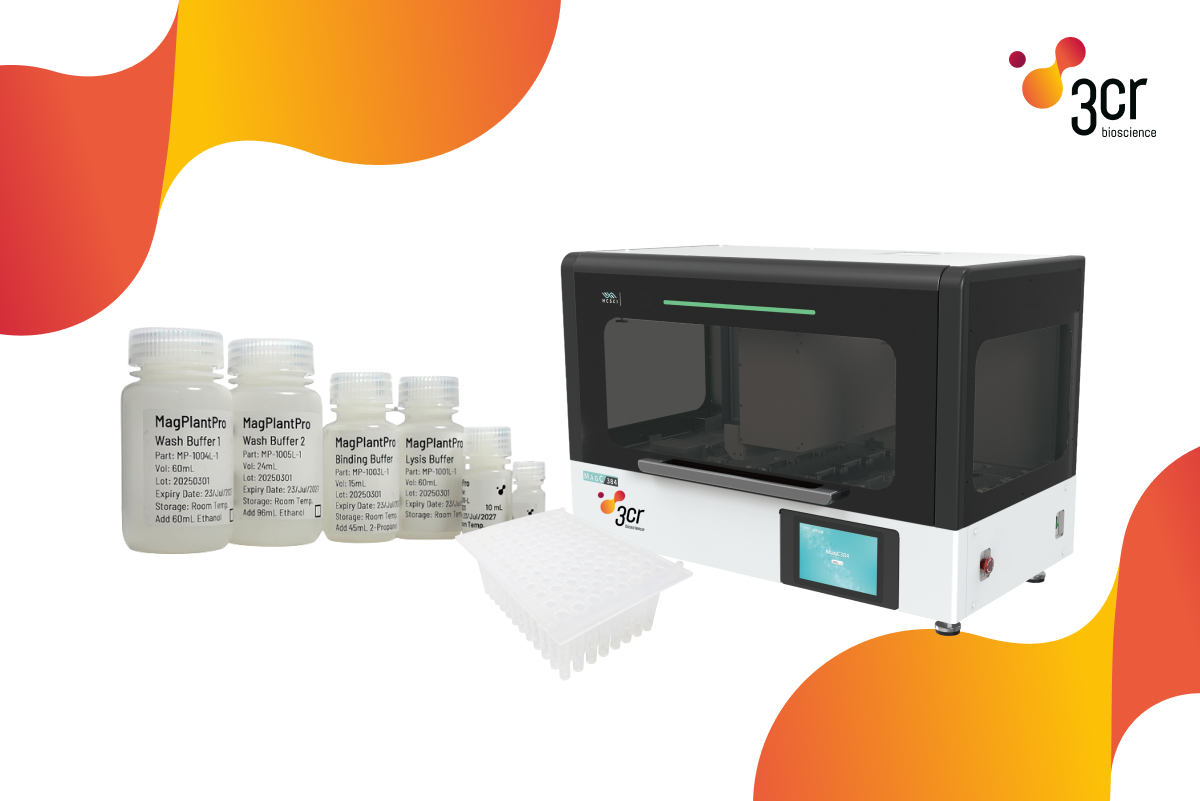
At 3CR Bioscience, we see this every day. That’s why our Mag Plant Pro and Mag Seed Pro extraction kits are designed not only for robust chemistry, but for seamless integration with high-throughput automation—particularly the MagC 384, enabling labs to tackle complexity at scale without sacrificing consistency.

This blog explores the most common DNA extraction challenges—and how optimising both chemistry and throughput can transform your workflow.

1. Complex Plant Chemistry—Now at Scale

Plant tissues bring inherent complexity, from polyphenols to polysaccharides and lipids. These compounds can interfere with DNA extraction and downstream applications—but the challenge becomes even greater when processing hundreds of samples simultaneously.

The scaling problem:

Manual optimisation across many samples introduces variability. Small inconsistencies in handling can lead to uneven DNA quality across plates.

How to optimise:

  • Apply targeted buffer modifications (e.g., DTT, β-mercaptoethanol)
  • Adjust input material for challenging chemistries
  • Standardise homogenisation methods

When paired with Mag Plant Pro, the MagC 384 ensures that optimised conditions are applied uniformly across all wells. This consistency is critical when working with chemically complex plant species at high throughput—removing variability introduced by manual workflows.

2. Yield Variability Across Large Sample Sets

Common causes:

  • Variability in sample input
  • Differences in tissue type or seed structure
  • Uneven lysis efficiency

Best practices:

  • Standardise sample input as much as possible
  • Use appropriate tissue types (e.g., young leaves, seed embryos)
  • Pool small seeds where needed

High-throughput platforms like the MagC 384 allow labs to process large numbers of samples under identical conditions. When used with Mag Seed Pro, this ensures consistent yields across entire plates—whether working with uniform crop samples or more variable seed types.
3. Lysis Efficiency: The Foundation of Consistency

Efficient lysis is essential for DNA recovery, but plant and seed tissues are often difficult to homogenise—especially in high-throughput formats.

The challenge at scale:

Manual disruption techniques can introduce variability between samples, impacting yield and quality.

Optimisation strategies:

  • Ensure thorough, uniform homogenisation (e.g., bead-based grinding)
  • Adjust lysis time and temperature for tougher samples
  • Incorporate Proteinase K where needed

While upstream homogenisation remains critical, the MagC 384 ensures that once samples enter the extraction workflow, lysis, binding, washing, and elution steps are performed with precision and reproducibility across all 384 wells. Combined with Mag Plant Pro and Mag Seed Pro, this creates a highly controlled and scalable process.

4. Protecting DNA Integrity in High-Throughput Workflows

DNA degradation is a common issue—but in high-throughput settings, delays and inconsistencies can amplify the problem.

Key risks:

  • Delays between sample preparation steps
  • Inconsistent timing across batches
  • Excessive handling

How to mitigate:

  • Minimise time between homogenisation and lysis
  • Standardise workflows to reduce variability
  • Avoid repeated freeze-thaw cycles

Automation with the MagC 384 reduces hands-on time and ensures consistent timing across all samples. This not only improves efficiency but also helps preserve DNA integrity—particularly important when working with large sample volumes.

5. Purity and Contamination Control at 384-Well Scale

Maintaining high DNA purity across hundreds of samples is challenging, especially when dealing with inhibitor-rich plant and seed materials.

Common issues:

  • Insufficient washing
  • Carryover of inhibitors
  • Ethanol contamination

Optimisation tips:

  • Increase wash steps for difficult samples
  • Reduce starting material where necessary
  • Ensure complete drying before elution

The automated magnetic bead-based workflow ensures precise and consistent washing across all wells. When combined with Mag Plant Pro and Mag Seed Pro, this delivers high-purity DNA at scale—ready for demanding downstream applications.

6. Seed-Specific Challenges—Handled Efficiently at Scale

Seed samples introduce additional complexity, from variable DNA distribution to contaminants in seed coats.

Challenges include:

  • Inhibitors from seed coats
  • Differences between embryo and endosperm
  • Handling very small or very large seeds

Practical solutions:

  • Remove seed coats where possible
  • Use embryo tissue for higher DNA yield
  • Pool small seeds to increase input

The Mag Seed Pro kit is designed to accommodate these variations, while the MagC 384 ensures that even highly diverse seed samples are processed consistently across large batches—supporting reproducible results in breeding, genotyping, and research workflows.

7. Downstream Performance Depends on Upstream Consistency

At high throughput, even small inconsistencies in DNA quality can lead to significant downstream issues.

Potential causes:

  • Residual inhibitors
  • Variability in DNA concentration
  • Inconsistent processing

Optimisation tips:

  • Ensure thorough washing and drying steps
  • Use accurate quantification methods
  • Standardise workflows as much as possible

By combining the proven chemistry of Mag Plant Pro and Mag Seed Pro with the precision of the MagC 384, labs can generate DNA that performs reliably across PCR, qPCR, SNP genotyping, and sequencing applications—at scale.

Turning High Throughput into High Confidence

Scaling up DNA extraction doesn’t have to mean scaling up problems. With the right combination of optimised protocols and high-throughput automation, labs can achieve both efficiency and consistency.

At 3CR Bioscience, our integrated approach—pairing Mag Plant Pro and Mag Seed Pro with the MagC 384—empowers labs to move beyond bottlenecks and variability, delivering reliable, high-quality DNA across every sample, every plate.

Ready to scale your plant and seed DNA extraction workflows?

Discover how the MagC 384, combined with our extraction kits, can help you achieve consistent, high-quality results—no matter the throughput.

MORE POSTS

Convert GWAS Discoveries into Robust Molecular Markers with PACE®
Discover how PACE® genotyping helps breeders turn GWAS discoveries into fast, scalable, and cost-effective molecular screening tools for real-world breeding success.
Solving Common Plant and Seed DNA Extraction Challenges with User Friendly Kits and Scalable Automation
Discover seven common plant and seed DNA extraction challenges—and how optimised chemistry combined with MagC 384 automation helps deliver consistent, high-quality DNA at scale.
Leaf Sample Collection Kit – User Guide
Ensure high-quality DNA extraction results by following our step-by-step guide to collecting, storing, and shipping leaf samples correctly.

Our product portfolio for your PCR genotyping workflow

Our portfolio of products and services include PACE® genotyping chemistry, instruments, and lab services to streamline every step of your workflow. Designed for life sciences, biotech, and agricultural research, our high-performance reagents, reliable instruments, and expert lab support help you achieve accurate, consistent results while reducing time and costs – making science affordable.

[fibosearch]
This field is for validation purposes and should be left unchanged.
Name(Required)

Contact us

Resolve Genotyping Challenges. With One Practical Guide.

From failed amplification to scattered cluster plots — this guide provides structured, expert-backed solutions for the 7 most common PACE® genotyping issues.

"(Required)" indicates required fields

This field is for validation purposes and should be left unchanged.
I’d like to sign up for the newsletter

MEET OUR TEAM

Steve AsquithManaging Director
Steve began his career in the Genetics Division of GlaxoSmithKline, as part of the team establishing GSK’s high-throughput core genotyping laboratory. Steve joined KBioscience when it was first founded in 2002 and was a key driver in taking the company from a small start-up to a multi-national service laboratory, quickly growing the company’s revenue to over $7.5M p.a. Following the acquisition of Kbioscience by LGC in 2011, Steve was appointed Global Director of Operations for LGC Genomics, responsible for over 100 staff in Europe and N. America, successfully elevating the genotyping products and service business. Steve held a crucial leadership role until he left in 2016. In 2017 Steve joined forces with John Holme to create 3CR Bioscience, a new company with a mission to deliver outstanding, customer-focused genotyping products with innovation and affordability at its core.
Dr. John HolmeTechnical Director

John joined KBioscience shortly after it was founded, in 2003, and became Head of Technical Development, building the company’s genotyping and DNA extraction product portfolio and service delivery until 2011 when it was acquired by LGC. Post-acquisition, John was appointed Head of Technical Group for LGC Genomics, in charge of all Research & Development and Technical Support activities for the company. In this role John continued to build on the high-quality products and services provided to the companies growing customer base.

During the 19 years John has worked in commercial R&D, he has co-invented numerous highly successful products including PACE®, ProbeSure, KASP™, KlearKall, KlearGene, KlearAmp and KlearTaq™, creating breakthrough offerings in genotyping and extraction and generating huge revenues for the companies he has worked in. In 2017, he joined forces with Steve Asquith and started 3CR Bioscience. John is dedicated to developing outstanding, innovative genotyping products and providing the very best technical support to customers globally.

Dr. Nisha JainOperations Director

Nisha has been innovating since the start of her career at Geneform Technologies developing Iso-thermal Genotyping Technologies. Nisha joined KBioscience in 2008, as Senior R&D Scientist and key account Technical Support Scientist, developing KASP and Klearkall performance and coinventing two further versions of KASP.

Nisha has more than 15 years’ experience working in molecular biology and genotyping technologies, with extensive experience in the areas of R&D, Quality Assurance and Customer Technical Support. She has technically assisted many giants of the industry with their protocol development and troubleshooting and continues to deliver high-quality support and guidance. In 2018, Nisha joined 3CR Bioscience as Operations Director where she continues to develop PACE and ProbeSure for an increasing range of applications, and to grow 3CR Bioscience’s new product pipeline. Nisha is dedicated to developing outstanding, innovative genotyping products and providing the very best technical support to customers globally.

Nazma SaffinGeneral Manager

For 20 years Nazma Saffin has worked and gained extensive expertise within the genotyping sector. Working at Kbioscience and then LGC, she has held operational leadership posts responsible for manufacturing and laboratory services. With experience of ISO 9001 implementation, production scale up and LEAN operations, Nazma has successfully led highly profitable production departments. Joining 3CR Bioscience in 2022, Nazma is committed to delivering operational excellence.

Greig PollandAutomation and Support Manager

Greig is a hands-on automation specialist and team leader with a strong background in laboratory and industrial automation. He has spent over 25 years developing, installing, and supporting automated systems that transformed laboratory workflows. During this time, Greig worked closely with scientists and engineers to tailor automation solutions for genotyping and molecular biology, an experience that sparked his lasting passion for combining technology with practical science.

Since then, Greig has built on that foundation through leadership roles where he leads automation and support operations. He’s known for being approachable, commercially minded, and deeply committed to helping teams and customers get the best from their technology.

Whether managing a complex automation rollout or helping a customer troubleshoot in real time, Greig brings a thoughtful, collaborative approach that keeps people ,not just machines, at the centre of what he does.

Daniel LawsonMarketing Manager
Daniel is a strategically minded marketing and communications professional with over a decade of experience delivering integrated, multi-channel campaigns across healthcare, legal and not-for-profit sectors. He has a strong track record in building brand visibility, driving engagement and supporting revenue growth through audience-focused marketing.
Prior to joining 3CR Bioscience in 2025, Daniel held senior marketing roles where he led strategic communications, managed brand development and delivered high-impact digital and content campaigns. His experience spans SEO, CRM, PR, events and stakeholder engagement, with a particular strength in translating complex messages into clear, compelling content.
At 3CR Bioscience, Daniel is responsible for shaping and executing the company’s marketing strategy, enhancing brand presence and supporting commercial growth through targeted, data-driven campaigns.