The challenge
In March 2020 the World Health Organisation characterised the global outbreak of COVID-19, caused by the severe acute respiratory syndrome coronavirus 2 (SARS-CoV-2), as a pandemic. A huge global effort followed to learn more about the virus, how it is transmitted and the disease it causes, to prevent and control outbreaks and find effective treatments and vaccines.
During the most recent SARS-CoV-2 outbreaks, tracking genetic variations from sequenced positive samples has yielded crucial information about the number of variants circulating in each new outbreak both locally and globally, and the possible lines of transmission. However, conventional tracking of the movement of genetic variants by sequencing the high numbers of positive SARS-CoV-2 samples used initially is prohibitively costly for the widescale population-scale test and trace operations needed for the future.
The solution
Innovative new PCR genotyping technology enhanced with reverse transcriptase PCR offers the hope of finding an alternative. The School of Biological Sciences, University of Bristol and 3CR Bioscience have collaborated to create a high-throughput, accurate, and cost-effective alternative to sequencing for monitoring genetic variants of SARS-CoV-2 in an outbreak.
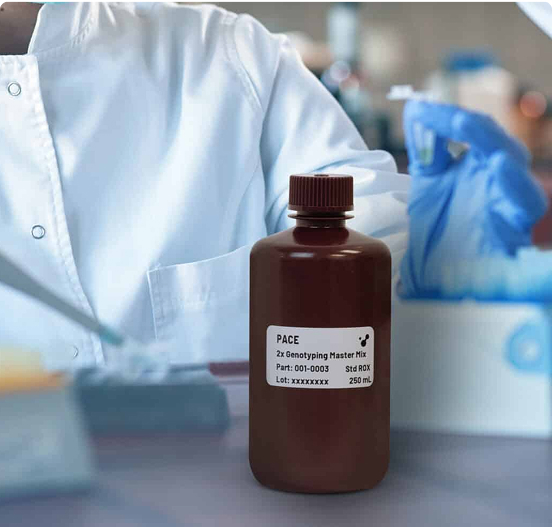
The technology at the heart of this breakthrough is 3CR Bioscience’s patented PACE OneStep Reverse transcriptase PCR genotyping technology, which allows precise detection of single nucleotide polymorphisms (SNPs) in a sample, directly from RNA. The group demonstrated that, using a small panel of polymorphic SNPs, it is possible to accurately define distinct clinical variant genotypes of SARS-CoV-2 strains that are emerging within a population.

Collaboration and innovation
For SNP design, COG-UK consortium alignment data were pre-processed to select positions in the viral genome which were polymorphic. Target marker numbers were then narrowed down through multiple rounds of refinement to identify a minimal SNP marker panel. It was found that a 19 SNP panel was capable of delineating 59 distinct variants from the COG-UK sequence alignment.
An initial evaluation of the test panel was successfully performed using RNA extracted from two sequenced, cell-culture propagated SARS-CoV-2 isolates which varied at ten nucleotide positions but with no changes to the wild-type spike gene sequences.
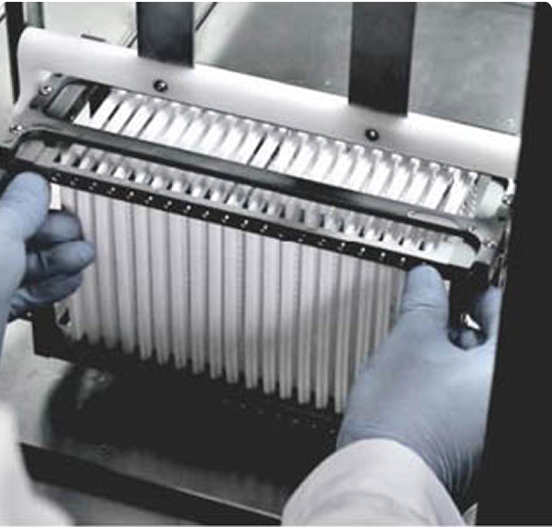
Genotyping was performed direct from RNA samples using genotyping assays designed by 3CR Bioscience and run with PACE OneStep Reverse Transcriptase PCR Master Mix, which combines reverse transcription of the RNA to cDNA and DNA amplification from the cDNA in a single reaction. The reactions were run in 1536-well plates using a Hydrocycler and read on a fluorescent plate reader.
Following initial validation, the pipeline was tested at the Public Health England (PHE) South West Regional Laboratory at Southmead Hospital, Bristol where 50 SARS-CoV-2 positive samples were genotyped.
Twelve out of the 19 test panel markers were polymorphic in the samples tested and eight samples had mixed calls for one or more markers. The results showed that PACE OneStep Reverse Transcriptase PCR genotyping with a small panel of SNPs can provide valuable variant tracking information to PCR-positive samples.
An accessible tool for widespread monitoring in future outbreaks
With the publicly available pipeline updated as viral genotypes arise or disappear from circulation, the minimal SNP panel can be quickly and inexpensively modified to keep pace with changes in strain emergence, thanks to the flexibility and versatility of 3CR Bioscience’s patented PACE genotyping chemistry.
It is not possible to sequence every PCR positive Sars-CoV-2 sample in the UK and genotyping has the potential to add informative genotype information to all positive results with minimal investment in equipment for diagnostic testing laboratories and at very low cost per sample.
With the recent emergence of several variants of concern and potential importance in the context of vaccine deployment, this approach offers an accessible, informative tool for epidemiological surveillance.
References:
- Harper, H., Burridge, A., Winfield, M., Finn, A., Davidson, A., Matthews, D., … & Barker, G. (2021). Detecting SARS-CoV-2 variants with SNP genotyping. PloS one, 16(2), e0243185.