Choosing the right DNA extraction instrument is essential for efficient and reliable genomic workflows involving nucleic acid purification. Whether you’re running a high-throughput research lab or need precise nucleic acid extraction instruments for clinical diagnostics, today’s advanced technologies offer automated solutions to meet every need. In this guide, we explore the best automated DNA extraction instruments and high-throughput genomics platforms, helping you select the ideal system for your applications. These systems play a crucial upstream role in high-throughput PCR genotyping, where reliable DNA extraction is essential for accurate, large-scale SNP analysis.
Automated DNA Extraction Instrument: Transforming Modern Genomics
The adoption of automated DNA extraction instruments is revolutionizing the way laboratories approach high-throughput genomics. No longer limited by manual, labor-intensive protocols, modern labs are leveraging automation to achieve faster, more reliable DNA extraction. As the demand for large-scale agricultural biotechnology and genomics research increases, automated DNA extraction instruments have become essential tools, making advanced workflows not only possible but also affordable for a wider range of labs.
The Role of Nucleic Acid Extraction Instruments
Modern nucleic acid extraction instruments are designed to isolate DNA and RNA efficiently from a variety of sample types, supporting reliable and scalable nucleic acid purification across high-throughput laboratory workflows. Instruments like the GeneExtract MagC 9600 and MagC 384 ensure high-quality nucleic acid yields suitable for downstream applications, from PCR and assay miniaturisation to next-generation sequencing. By integrating automated nucleic acid extraction into your workflow, you can reduce manual errors, increase sample purity, and handle more samples in less time. The high-quality DNA produced by these instruments is ideal for downstream automated pipetting workflows, ensuring consistent and scalable PCR and genotyping setup in high-throughput labs.
Efficient DNA extraction begins with proper sample disruption. For fast, uniform homogenisation of leaf, seed, and tissue samples, the PCR Turbo Grinder automated tissue homogeniser provides high-throughput, contamination-free grinding ideal for downstream DNA extraction.
Meet GeneExtract: High-Throughput DNA Extraction That Delivers Speed, Purity, and Unbeatable Value
At 3CR Bioscience, we’ve developed two powerful, cost-effective DNA extraction instruments to meet this need: the GeneExtract MagC 9600 and the GeneExtract MagC 384. Designed to deliver high-purity nucleic acid extractions with unmatched speed, efficiency, and affordability, these platforms are built for labs working with high-throughput leaf, seed, blood and tissue DNA extraction for research and development purposes. Whether you’re comparing against industry leaders, or moving away from labour-intensive manual workflows, 3CR Bio’s solutions stand out on performance—and price.

High Throughput DNA Extraction for Modern Labs
As genomics projects expand, the demand for high throughput DNA extraction continues to rise. Automated platforms like the GeneExtract MagC 9600 and MagC 384 are purpose-built to handle hundreds of samples per run, drastically reducing turnaround time and improving consistency. High throughput DNA extraction ensures that labs can keep pace with large-scale research, breeding programs, and routine quality testing—without sacrificing accuracy or increasing labor costs.
Why Automated DNA Extraction?
The Challenges of Manual Extraction
Manual DNA extraction, while traditionally used, is increasingly impractical for labs processing hundreds—or thousands—of samples per week. It’s laborious, time-consuming, and prone to variability, introducing the risk of contamination and inconsistent results. Automated DNA extraction eliminates these bottlenecks by standardising processes, improving reproducibility, and dramatically increasing throughput.
The Benefits of Automation
With instruments like the GeneExtract MagC 9600 and MagC 384, extraction becomes faster, cleaner, and more scalable. And crucially, the cost per sample is often significantly lower than with manual extraction—particularly when you factor in labour, consumables, and sample loss due to human error.

The Power of Automated Genomics Instruments
Modern automated genomics instruments are transforming the landscape of molecular biology by streamlining complex workflows and increasing efficiency in the lab. These cutting-edge devices integrate multiple processes such as DNA extraction, purification, and quantification into a single, user-friendly platform. By minimizing manual handling and human error, automated genomics instruments ensure high-quality, reproducible results while saving valuable time and resources. As genomics research expands into new frontiers, these instruments are vital for accelerating discovery and enabling high-throughput analysis in both research and clinical settings.
Introducing the GeneExtract MagC 9600 and MagC 384: Smart Automation, Scaled to Your Workflow
3CR Bioscience’s GeneExtract series offers two platforms tailored to the needs of high-throughput laboratories:
GeneExtract MagC 9600
- Capacity: 1 x 96-well plate (up to 96 samples per run)
- Runtime: 25–30 minutes per cycle
- Best for: Labs needing consistent throughput with single-plate processing
GeneExtract MagC 384
- Capacity: 4 x 96-well plates (up to 384 samples per run)
- Runtime: 25–30 minutes per cycle
- Best for: Large-scale facilities needing high-throughput DNA extraction across varied sample types
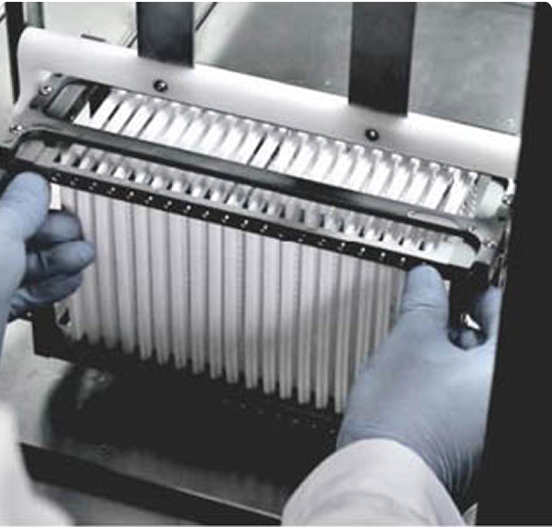
Both systems support magnetic bead-based nucleic acid purification, providing high-quality DNA ideal for applications such as PCR, sequencing, PACE® SNP genotyping, and microarrays. They feature pre-loaded protocols, an intuitive touchscreen interface, and built-in contamination control via UV sterilisation and HEPA-filtered airflow. Their consistent DNA yield and purity support automated pipetting workflows, ensuring reproducible reaction setup across 96- and 384-well formats.
Application Spotlight: Plant Genotyping & Seed Testing
The GeneExtract systems are widely used in agricultural biotechnology, where leaf and seed DNA extraction is essential for crop improvement, trait analysis, and quality control. Here’s how they fit into real-world workflows:
- Breeding Programs: Rapid, reliable DNA extraction enables fast genotyping of hundreds of seed or leaf samples to select for desirable traits.
- Seed Purity Testing: Automated extraction provides consistent nucleic acid yields necessary for accurate hybrid purity assessment.
- NGS Workflows: High-integrity DNA from GeneExtract systems supports downstream library prep and sequencing, ensuring efficient, reliable data generation.
Thanks to the modular flexibility of the MagC 384, labs can scale up or down depending on project size, processing 1–4 plates per run without compromising on speed or quality.
Manual vs Automated DNA Extraction: A Direct Comparison
| Feature | Manual Extraction | Automated DNA Extraction (MagC 9600/ MagC 384) |
| Hands-On Time | High (45–90 min) | Low (setup only; 25–30 min runtime) |
| Throughput | Limited (1–24 samples) | High (up to 384 samples/run) |
| Contamination Risk | Moderate–High | Low (UV/HEPA systems) |
| Reproducibility | Variable (operator dependent) | High (standardised protocols) |
| Sample Loss/Error | Common | Rare (automated handling) |
| Labour Cost | High | Low (minimal supervision needed) |
| Per Sample Cost | Variable; often higher | Lower (especially with 3CR’s low-cost consumables) |
Transitioning to automated DNA extraction can reduce turnaround time by over 70% while boosting accuracy and consistency across batches—benefits that are essential for high-throughput labs.
Designed for Lab Flexibility
Both the MagC 9600 and MagC 384 are plug-and-play, requiring no air or water hookups and minimal setup. The stackable design of the MagC 384 allows up to three units to be combined, offering processing capacity of over 1,000 samples per hour within a compact footprint.
Customisable protocols, compatibility with a wide range of magnetic bead-based extraction kits, and built-in sample protection (over-temperature alarms, power failure recovery) make the GeneExtract range ideal for a variety of genomics and diagnostic workflows.
Exceptional Value Without Compromise
One of the biggest barriers to automation is often the cost—but that’s exactly where 3CR Bioscience offers a clear advantage.
Our systems are engineered to keep consumable costs low. Unlike competitors that lock you into proprietary plastics or expensive service contracts, our MagC 9600 and MagC 384 use only tip combs and deep-well plates, which are available at a fraction of the cost from 3CR.
“With GeneExtract, we’re not just automating DNA extraction—we’re making it accessible. Our goal is to empower every lab to work faster, cleaner, and smarter, without breaking the budget.” – 3CR Bioscience Product Team
This makes our systems ideal for academic institutions, agritech startups, and biotech companies scaling up operations without enterprise-sized budgets.
Built-In Support & Consumables Designed for Performance
To ensure maximum uptime and performance, 3CR offers dedicated service and support, including:
- Spares & Support Kits with essential parts and remote engineer access
- On-site support from experienced field engineers
- High-quality consumables like:
- 2.2mL 96 deep-well plates designed for optimal magnetic bead separation
These consumables ensure maximum recovery, protect the lifespan of your magnetic rods, and support contamination-free workflows.
Real-World Results, Backed by Science
Across customer labs, the GeneExtract series is already helping accelerate genomics projects with precision and speed:
- Biotech Firms use the MagC 9600 for rapid DNA prep from leaf tissue in crop research.
- Agricultural Research Centres rely on the MagC 384 for bulk DNA extractions from seed banks.
- Academic Core Facilities choose 3CR Bio to reduce cost-per-sample and improve throughput without expanding headcount.
In all cases, users report better reproducibility, staff freed for more applied research, and significant time savings over manual methods.
Conclusion: Automate Your DNA Extraction Affordably
Automated DNA extraction is now essential for high-throughput labs. With GeneExtract MagC 9600 and MagC 384, 3CR Bioscience delivers reliable, high-performance solutions at an accessible price. Ready to upgrade? Discover how affordable automation can transform your workflow.