SNP genotyping assays are essential tools for detecting single nucleotide polymorphisms (SNPs) and analyzing genetic variation across organisms. These assays are widely used in research and applied biosciences to support high-throughput genotyping applications, from improving disease resistance in aquaculture species and enhancing crop yield traits to advancing livestock breeding and studying human disease associations. With scalable PCR-based technologies and automated workflows, modern SNP genotyping assays enable accurate, efficient, and reproducible genetic analysis across a wide range of life science fields.
In this blog, we’ll explore the fundamentals and intricacies of SNP genotyping with allele-specific PCR assays, dig into the importance of strategic PCR assay design, and look at the evolving technology behind allele-specific PCR for high-throughput SNP Genotyping. Along the way, we’ll showcase how 3CR Bioscience’s PACE Genotyping Assays and PACE Genotyping Master Mixes system are technology leaders for allele-specific SNP genotyping, offering unmatched flexibility, precision, and cost efficiency for projects in any sector.
What Is SNP Genotyping?
SNP genotyping is the process of determining which allele an individual carries at a specific, known position in the genome. It reads defined single-base variants rather than sequencing the whole genome, which makes it fast enough and cheap enough to screen thousands of samples against a fixed marker set.
The distinction from a SNP genotyping assay is simple: SNP genotyping is the method, an assay is the specific reagent set designed to interrogate one variant. A genotyping project combines many assays into a panel.
SNP genotyping assays are molecular techniques used to detect single nucleotide polymorphisms (SNPs), single-base changes in the DNA sequence that occur frequently throughout the genome. Because SNPs are abundant and widely distributed, they serve as highly reliable genetic markers for identifying variation between individuals, populations, and species. As a result, SNP genotyping assays are widely used in genetic research, breeding programs, and applied life sciences.
These assays support a broad range of genotyping applications, including:
- Genetic diversity analysis in aquaculture species, livestock populations, and crop germplasm
- Linkage mapping to identify traits in fruits, vegetables, and other crops
- Quantitative trait loci (QTL) identification for disease resistance, productivity, and yield traits
- Genome-Wide Association Studies (GWAS) in human and veterinary life science research
- Marker-Assisted Selection (MAS) for accelerating plant and animal breeding programs
- Genomic selection in high-value breeding pipelines, from salmon to strawberries
In addition to SNPs, insertions and deletions (Indels) represent another important form of genetic variation. Indels involve the addition or removal of short DNA sequences and are valuable markers in applications ranging from crop trait mapping to population studies in wild fish stocks.
Both SNPs and Indels can be analyzed using PCR-based SNP genotyping methods, including allele-specific PCR technologies. The design of robust SNP genotyping assays and optimised assay chemistry is critical to ensure accurate detection, particularly in high-throughput PCR genotyping platforms used in modern agricultural, aquaculture, and life science research.
For the wider comparison between reading known markers and reading whole sequences, see genotyping vs sequencing.
Recommended Workflow for Automated SNP Genotyping
A recommended workflow for automated SNP genotyping typically involves several key steps designed to ensure accuracy, scalability, and reproducibility across large sample sets. Modern laboratories rely on automated systems and optimised PCR-based assays to streamline the genotyping process and reduce manual handling.
A typical automated SNP genotyping workflow includes:
- Sample preparation and DNA extraction: High-quality DNA is essential for reliable SNP detection.
- Assay design and selection: SNP genotyping assays are designed to target specific genetic variants using allele-specific primers or probes.
- PCR amplification: Target DNA regions containing SNPs are amplified using optimised PCR conditions.
- Allele discrimination: Detection systems distinguish between SNP alleles based on fluorescence or other signal outputs.
- Automated data analysis: Software platforms interpret genotyping results and cluster samples based on genotype calls.
Automated SNP genotyping workflows enable laboratories to process thousands of samples efficiently while maintaining high accuracy and reproducibility.
Laboratories that would rather not build this workflow in house can outsource all or part of it through 3CR Bioscience’s genotyping services.
Common Genotyping Applications
SNP genotyping assays support a wide range of genotyping applications across research, agriculture, aquaculture, and medical science. Because SNP markers are abundant throughout genomes, they provide valuable insights into genetic variation and trait inheritance.
Key genotyping applications include:
- Plant breeding and crop improvement for yield, disease resistance, and quality traits
- Livestock and aquaculture breeding programs to enhance productivity and resilience
- Human genetic research including disease association studies and pharmacogenomics
- Population genetics and biodiversity studies to understand genetic structure and evolution
- Marker-assisted selection (MAS) and genomic selection in modern breeding pipelines
By enabling reliable detection of genetic variation, SNP genotyping assays support both fundamental research and applied breeding strategies.
Crop programmes in particular are covered in more depth on 3CR Bioscience’s crop genotyping page.
High-Throughput PCR SNP Genotyping Methods and Platforms
Advances in PCR technology have enabled the development of high-throughput PCR SNP genotyping methods and platforms, allowing researchers to analyze large numbers of samples and markers simultaneously. These systems are particularly valuable in large breeding programs, genomic research projects, and population-scale studies.
High-throughput SNP genotyping platforms typically combine:
- Allele-specific PCR assays for precise variant detection
- Automated liquid handling systems for scalable sample processing
- Multiplexing capabilities to analyze multiple SNP markers in parallel
- Integrated data analysis software for efficient genotype calling and quality control
Platforms designed for high-throughput SNP genotyping significantly reduce time, labor, and costs while enabling large-scale genetic analysis across diverse life science applications.
SNP Genotyping Methods Compared
Choosing an SNP genotyping method comes down to three questions: how many markers per sample, how many samples, and whether the markers are already known. The table below sets the main methods against each other.
| Method | How it works | Markers per sample | Best suited to | Cost per data point |
| Allele-specific PCR (PACE®, KASP™, TaqMan™) | Competing allele-specific primers, fluorescent readout | 1 to roughly 100 known SNPs or indels | Marker-assisted selection, trait screening, edit validation, parentage | Lowest at high sample numbers |
| DNA microarray (SNP chip) | Thousands of probes hybridise to labelled DNA | Thousands to millions, fixed panel | Genomic selection, GWAS, high-density fingerprinting | Low per marker, high per sample |
| Genotyping by Target Sequencing (GBTS) | Targeted capture followed by next-generation sequencing | Hundreds to thousands, flexible panel | Genomic selection, diversity analysis, marker discovery | Moderate, scales with depth |
| Whole-genome sequencing | Reads every base in the genome | Unlimited, discovery of unknown variants | Marker discovery, reference building | Highest |
| RFLP | Restriction enzymes cut DNA, fragment sizes reveal variants | One at a time | Legacy low-throughput marker analysis | Low reagent cost, high labour |
In practice the methods are complementary. Many breeding programmes discover markers with sequencing or arrays, then screen those markers across large populations with allele-specific PCR, where the cost per data point is lowest.
Why Assay Design Matters
A genotyping assay is only as effective as its design. Poorly designed assays can lead to off-target amplification, allele dropout, or inconsistent results, whether you’re screening for a plant disease resistance allele, confirming livestock parentage, or detecting a sex-linked marker in fish. A successful SNP genotyping assay depends on multiple factors, including the target sequence, flanking regions, polymorphism context, and detection chemistry.
Here are several critical considerations when designing your PCR-based genotyping assays:
1. High-Quality Sequence Information
The accuracy of genotyping starts with the quality of the sequence data. Ideally, at least 50 nucleotides upstream and downstream of the target SNP are needed for optimal primer design. This ensures that primers can be positioned correctly for selective and specific binding. This is essential whether you’re developing a drought tolerance marker for wheat, a firmness trait assay for strawberries, or a growth rate marker for salmon. While some assays can function with fewer bases, more sequence context improves performance and reduces the risk of primer-dimer formation or mispriming.
2. Avoiding Nearby Polymorphisms
Unidentified SNPs or Indels near your target site can interfere with primer binding and reduce assay specificity. This is especially critical in highly diverse populations such as wild-caught aquaculture broodstock or crossbred livestock. By understanding and mapping nearby variants, you can refine your assay design to avoid regions prone to genetic variation, increasing both accuracy and reproducibility.
3. Dealing with Homology
In cases where similar sequences exist elsewhere in the genome, non-specific amplification can occur. If genomic homology is suspected, incorporating unique anchor bases near the SNP of interest can enhance selectivity. This is particularly important in polyploid crops like wheat and in closely related fruit varieties where genomic similarity is high. These bases ensure that only the desired region is amplified, boosting signal clarity.
The five design patterns 3CR Bioscience uses most often are set out in Top 5 Assay Designs for SNP and Indel Genotyping.
PACE®: A Technology-Leading Allele-Specific PCR System
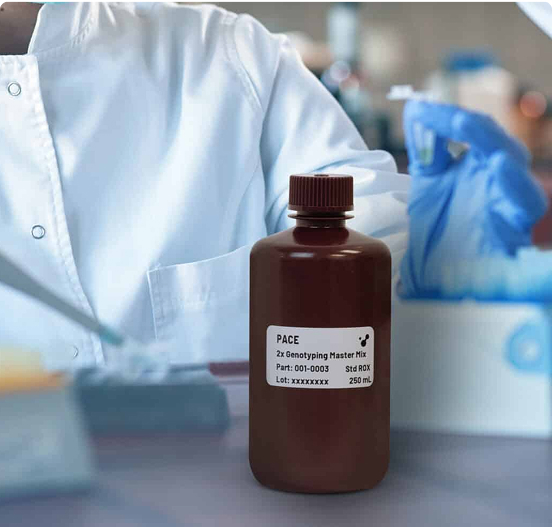
Developed by 3CR Bioscience, PACE (PCR Allele Competitive Extension) is a cutting-edge allele-specific PCR chemistry optimised for SNP and Indel detection. PACE builds on traditional PCR principles but incorporates advanced features for increased performance, cost-efficiency, and adaptability.
As von Maydell (2023) describes, PACE technology is especially effective when analyzing a small number of SNPs in large sample sets for applications like sex determination, genetic mapping, and cross validation. PACE® is ideal for projects across all sectors — from large-scale cereal breeding to rapid pathogen detection in shrimp farming, to QTL screening in cattle and poultry.

The PACE Reaction Explained
PACE reactions utilize:
- Two allele-specific forward primers, differing only at their 3′ ends.
- A common reverse primer, located downstream of the SNP or Indel.
- Universal fluorescent reporting cassettes, contained in the master mix.

During amplification:
- If the SNP is homozygous, only one allele-specific primer binds and one fluorescent signal is emitted.
- If the SNP is heterozygous, both allele-specific primers bind, and both fluorophores are activated, producing a mixed signal.
This fluorescence is detected either via endpoint analysis (e.g., plate reader) or real-time PCR (qPCR machine). PACE’s reporting mechanism ensures that results are both accurate and machine-readable across a range of platforms.
Its ability to multiplex up to four targets in a single reaction can accelerate breeding pipelines in fruit and vegetable crops, as well as enable simultaneous detection of multiple disease markers in aquaculture or livestock.
The composition of the master mix itself, and what each component does, is covered in what is a PCR master mix.

Check out our video of the PACE mechanism for more detailed explanation.
Seamless Workflow Integration with High-Precision Plate Reading
While automated extraction platforms handle the upstream purification process, many genomics workflows rely on accurate endpoint fluorescence detection for downstream applications such as PACE® SNP genotyping. To support this, 3CR Bioscience offers the GeneScanner PCR Plate Reader,a high-speed, high-resolution fluorescence scanner designed for high-throughput genotyping. With full-field CCD imaging, rapid 5-second read times, multi-channel detection, and integrated barcode tracking, the GeneScanner provides the ideal next step after automated DNA extraction, ensuring precise data capture and maximum workflow efficiency.
Types of Variants PACE Can Detect
PACE Genotyping Assays offer remarkable flexibility, supporting a wide variety of genetic variants, including:
- Biallelic SNPs: the most common SNP format.
- Single-base Indels: small insertions or deletions at the base-pair level.
- Small Indels: up to several bases in length.
- Large Indels with known junctions: where primer placement is predictable.
- Large Indels without known junctions: requiring customised primer strategies.
In addition, PACE Multiplex Master Mix allows for up to four targets in a single reaction:
- Two SNPs in one tube
- Tri- and tetra-allelic SNPs
- Three genes + a reference gene in one assay
This level of multiplexing reduces costs, saves time, and increases throughput, making it ideal for high-volume labs and breeding programs.
Technology Compatibility and Versatility
PACE reactions are compatible with all major genotyping platforms and thermal cyclers, including:
- 96-well, 384-well, and 1536-well PCR plates
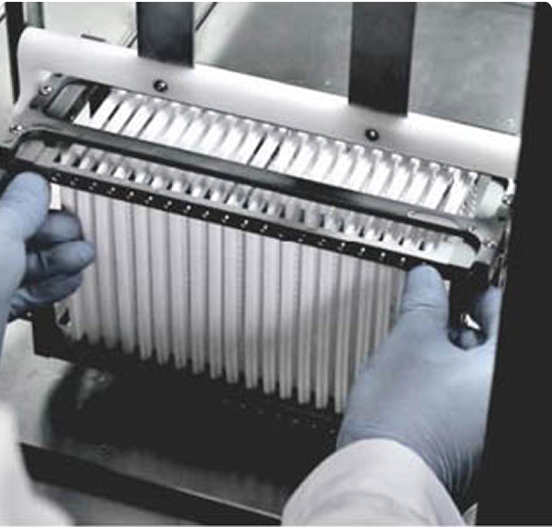
- Array Tape® systems
- qPCR machines and fluorescent plate readers
Furthermore, PACE reagents are fully compatible with KASP™ and Amplifluor™ markers, which also use the same 5′ tail sequence design. This means researchers can transition to PACE without redesigning existing assays, maximizing both backward compatibility and future scalability.
Beyond SNP Genotyping: Emerging Applications
PACE chemistry is not limited to SNP and Indel detection. Its versatility opens the door to several other applications:
- Aquaculture: Rapid detection of pathogens such as sea lice or viral agents.
- Animal breeding: Parentage verification and trait marker screening in cattle, pigs, and poultry.
- Crop & Vegetable breeding: On-site genotyping for accelerated selection cycles.
- Fruit breeding: Early selection for traits like sweetness, firmness, and disease resistance.
- Life sciences: Pathogen detection, transgene confirmation, and gene expression studies.
The Evolution of Allele-Specific PCR
Since its first description by Newton et al. in 1989, allele-specific PCR (AS-PCR) has evolved from a niche genotyping method into a robust and widely used platform. Modern genotyping chemistries, like PACE, retain the core competitive primer strategy but improve on it with better fluorescent detection, universal reagents, and increased assay robustness.
The latest systems, including those offered by 3CR Bioscience, focus on:
- Improved performance with crude DNA or low-template samples
- Increased multiplexing capabilities
- Direct genotyping from RNA
- Universal cassettes for fluorescence detection
- Dependence on high-quality DNA extraction to ensure clean templates and reliable assay performance
These innovations reduce per-sample costs and simplify assay setup, making high-throughput genotyping more accessible than ever.
Frequently Asked Questions About SNP Genotyping
What is SNP genotyping used for?
SNP genotyping is used to determine which allele an individual carries at known positions in the genome. Applications include marker-assisted selection and genomic selection in plant and animal breeding, QTL mapping, parentage verification, diversity analysis, gene edit validation and pharmacogenomics in human research.
What is the difference between SNP genotyping and sequencing?
Sequencing reads every base in a region or genome and is used to discover unknown variants. SNP genotyping interrogates known positions only, which makes it faster and cheaper for screening many samples against a defined marker set. Programmes commonly sequence to discover markers, then genotype to screen them.
What are the main SNP genotyping methods?
The main methods are allele-specific PCR such as PACE®, KASP™ and TaqMan™, DNA microarrays, sequencing-based approaches including GBTS and whole-genome sequencing, and the older RFLP technique. Each balances marker count, sample throughput and cost per data point differently.
Can PACE® replace KASP™ assays without redesigning them?
Yes. PACE® reagents use the same 5′ tail sequence design as KASP™ and Amplifluor™ markers, so existing assays can be transferred without redesign.
How many SNPs can be genotyped in one reaction?
PACE® Multiplex Master Mix detects up to four targets in a single reaction. This can be two SNPs in one tube, tri- and tetra-allelic SNPs, or three genes plus a reference gene.
Why Choose 3CR Bioscience?
At 3CR Bioscience, we combine technical excellence with a strong commitment to customer support. Our scientists work hand-in-hand with researchers to design, optimise, and scale genotyping assays for projects of all sizes, from small academic studies to enterprise-scale breeding programs.
We offer:
- For aquaculture: Assays for sex determination, pathogen detection, and genetic mapping.
- For animal breeding: Solutions for QTL identification, genomic selection, and breeding programme optimisation.
- For crop & vegetable breeding: High-throughput trait screening to fast-track variety development.
- For fruit breeding: Precision assays for flavour, shelf life, and disease resistance traits.
- For life sciences: Tools for research in human genetics, molecular biology, and model organisms.
Teams weighing up whether to run assays in house or outsource them will find the decision criteria in outsourcing SNP genotyping services.
Let’s Work Together
Interested in learning more about how PACE can enhance your genotyping workflow?
Looking for expert input on PCR assay design?
Contact us at support@3crbio.com, our team is ready to assist with assay development, troubleshooting, and custom project planning.
You can also read our technotes on the subject:
- Top 5 Assay Designs for SNP and Indel Genotyping
- Genotyping Data: A Practical Guide for Optimisation
Browse 3CR Bioscience’s PACE® genotyping products to see master mixes, assays and consumables for these workflows.
In Summary
SNP genotyping assays have transformed how researchers understand and manipulate genetic variation. With the right combination of thoughtful assay design, proven allele-specific PCR chemistry, and flexible, cost-effective reagents, projects of any scale can be tackled with confidence.
PACE®, developed by 3CR Bioscience, represents the next generation of genotyping technology, combining precision, adaptability, and affordability into one powerful platform.
Partner with us and accelerate your genotyping workflow, whatever your sector.
For Research and Development purposes only. Not for diagnostic use.
Legal Information
TaqMan™ is a registered trademark of Roche Molecular Systems, Inc.
KASP™ and ArrayTape™ are trademarks of LGC Biosearch Technologies
Amplifluor® is a registered trademark of Merck KGaA